Red Sea · Sep 10, 2026
Abu Dabbab — turtles, a dugong, and a long drive
The turtles are near-certain. The dugong is not. The gap between those two is the whole article.

Abu Dabbab is a shallow bay south of Marsa Alam with a seagrass meadow on its floor, and that meadow is the whole reason anyone drives four hours to get there. Green turtles graze it, reliably and in numbers. A dugong sometimes does too — and the gap between "reliably" and "sometimes" is the single most important thing to understand before you book.
What is actually in the bay
The bay is unusual for the Red Sea. Most of the coast is coral; this is a broad, sandy, shallow bowl carpeted in seagrass, which is a food source rather than a reef. That changes what lives there.
- Green turtles. The main event, and the reason to go. They are large, unbothered, and grazing — which means they stay put and surface every few minutes to breathe. Seeing several in a session is normal.
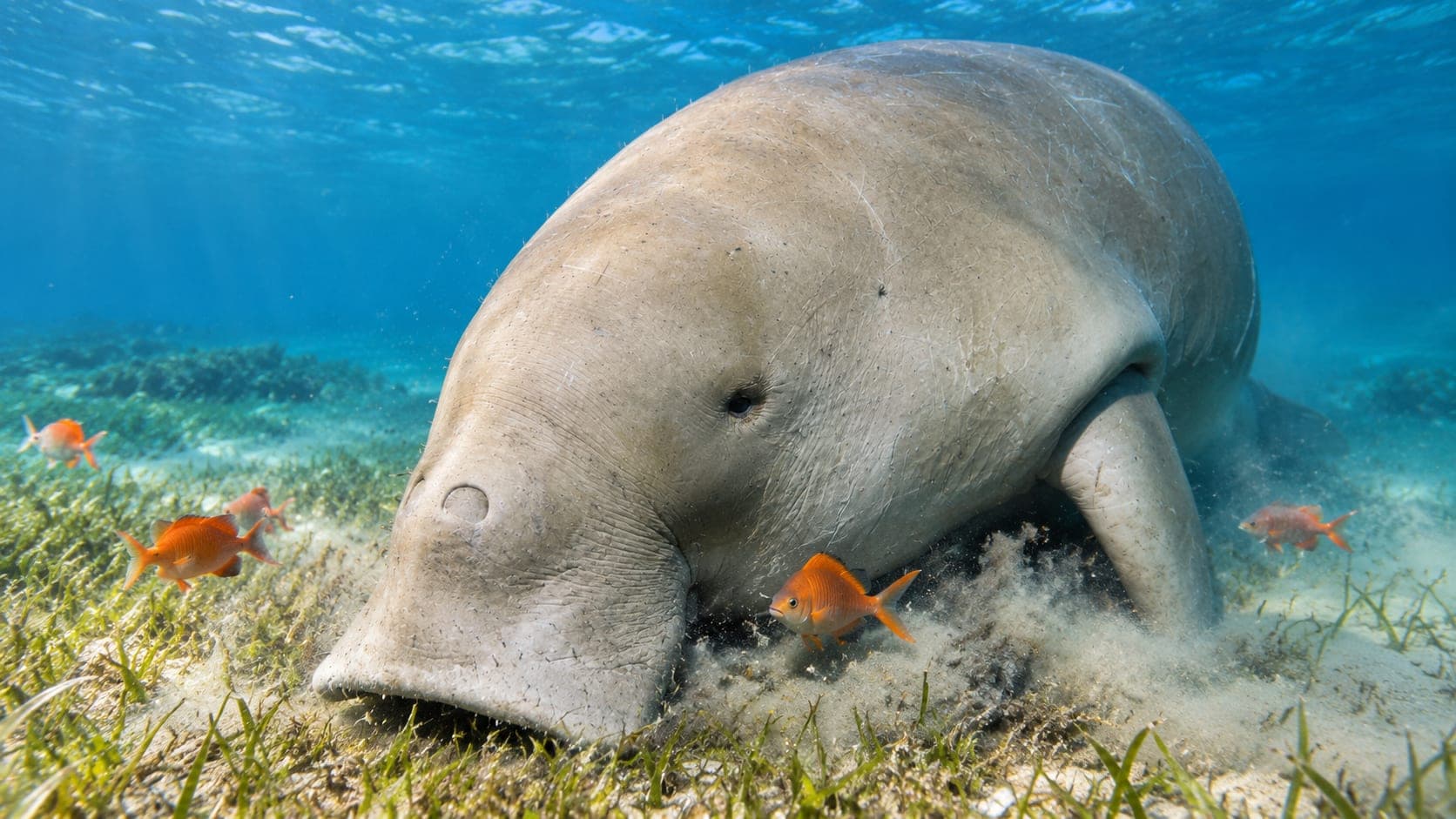
- The dugong. A marine mammal, a relative of the manatee, that eats the same seagrass. Abu Dabbab has had resident individuals over the years and is one of the few places in the world where snorkellers occasionally meet one. Occasionally. There is no guarantee, no schedule, and no operator can honestly promise it.
- Guitarfish and rays on the sand, which many people notice only when one moves.
- Very little coral in the middle of the bay. If you came for reef colour, this is not the trip; the reef is at the edges and it is not why the bay is famous.

Shallow turquoise water over the seagrass bay at Abu Dabbab
The honest bit about the dugong
Trips to Abu Dabbab are frequently sold on the dugong, with a photograph of one on the listing. We would rather say plainly: most people who visit Abu Dabbab do not see a dugong. Turtles, yes, nearly always. The dugong is a bonus and should be treated as one.
This matters for two reasons. The obvious one is disappointment — a four-hour drive each way is a long way to go for an animal that may not be there, and being told the odds beforehand is the difference between a good day and a grievance.
The less obvious reason is that a boat full of people who were promised a dugong behaves badly when one appears. They crowd it, they chase it, they get between it and the surface. A dugong that is harassed leaves the bay, which is very likely part of why sightings have become less frequent than they once were. Managing expectations is not just customer service here; it is the difference between a bay that still has one and a bay that does not.

Book what you just read about
Explore related tours and check each trip for available booking options and inclusions.