
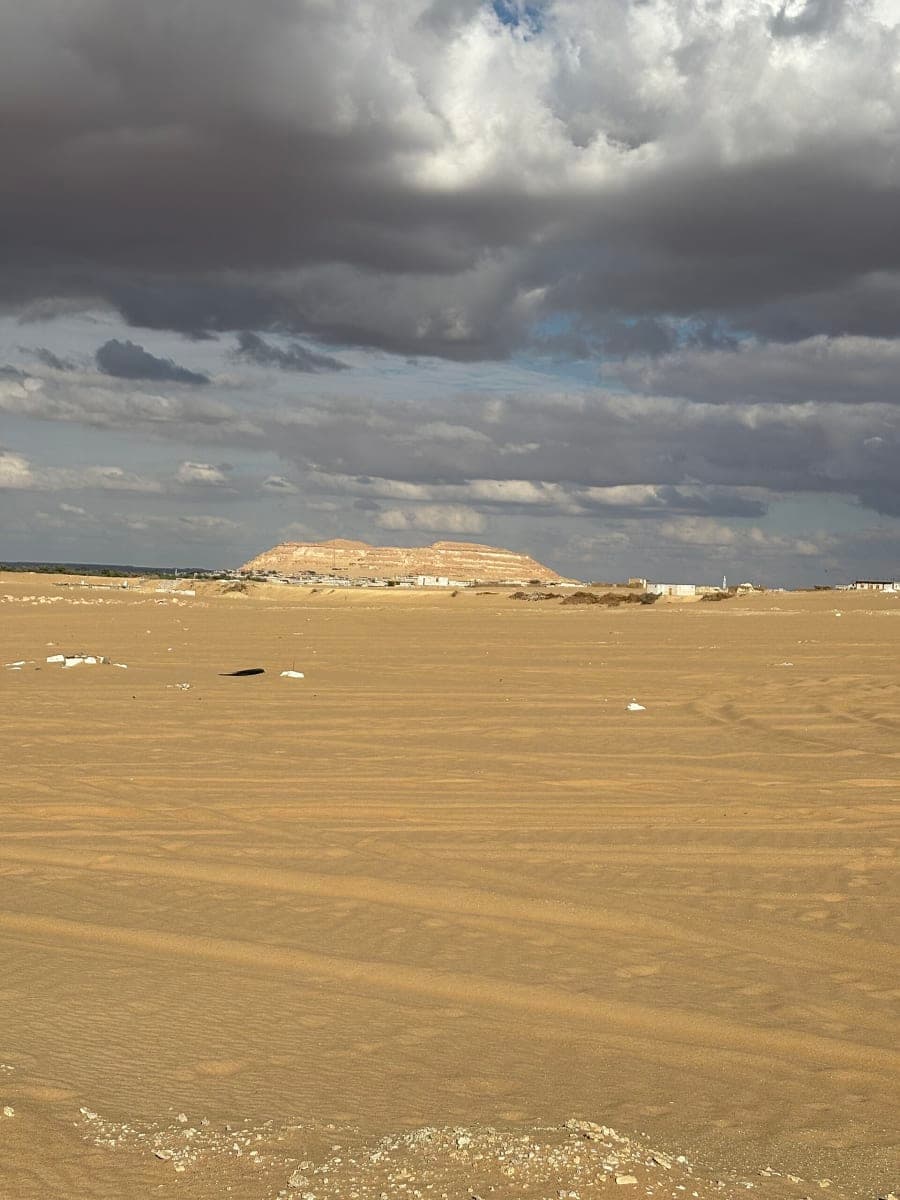
Vast field of towering desert dunes
Great Sand Sea
Typical visit: 4 h
An immense sea of sand dunes stretching from Siwa deep into the Sahara.
Photos


About
One of the largest dune fields on earth: roughly 72,000 square kilometres of sand straddling the Egyptian–Libyan border, west of Siwa and the New Valley. Its dunes are seif or sword dunes — long parallel ridges running north to south, some over a hundred kilometres end to end and a hundred metres high.
There is nothing in it. No settlements, no water, no road. Access is by organised desert expedition only, with permits, a convoy of vehicles, satellite communication and a guide who knows the crossing points between dune lines.
What an expedition involves
- Multiple days of driving with camping between the dunes
- Sand-boarding on the slip faces, which is the fun part
- Fossil beds, ancient lake sediments and, in places, stone tools lying on the surface
- Night skies with essentially zero light pollution
This is a serious undertaking rather than a day trip. Go with a reputable operator and expect the itinerary to change with conditions.
History & background
The sand sea took shape over hundreds of thousands of years as prevailing winds moved material south and piled it into ridges. It sits over older landscapes: beneath and between the dunes are the beds of lakes and rivers from the wet phases of the Sahara, and stone tools, grinding stones and fossil wood turn up on the surface where the sand has moved on.
Desert glass
Scattered across a remote area near the Libyan border is Libyan Desert Glass — pieces of pale yellow-green natural glass, some as large as a fist, formed roughly 29 million years ago by heat intense enough to melt sand. The most widely held explanation is a meteorite impact or airburst.
People have been collecting it for a very long time. A worked piece of this glass forms the central scarab in one of the pectorals found in Tutankhamun's tomb — meaning a fragment of an impact event travelled hundreds of kilometres across the desert to end up on the chest of a pharaoh.
The lost army
Herodotus records that the Persian king Cambyses sent an army of fifty thousand men from Kharga towards Siwa to destroy the oracle, and that the force was overwhelmed by a sandstorm and never seen again. Expeditions have searched for it repeatedly for over a century. Nothing conclusive has ever been found, and many historians doubt the story entirely.
Zerzura
The desert also carries the legend of a lost white city among the dunes. In the 1920s and 30s a small group of explorers — including the Hungarian László Almásy, later fictionalised in The English Patient — used aircraft and cars to map this region while looking for it. They found no city, but they produced the first reliable survey of the sand sea.
Design your own day-by-day schedule
Pick how many days you have, add attractions per day, and see average activity and travel times between cities.
See it with
Places that carry the same story forward, or sit close enough to take in the same day.
Tours that include this attraction
Book a ready-made tour or use the designer above to build your own plan.
No matching tours yet — contact us for a custom itinerary.