Culture · Sep 23, 2026
St Anthony's and St Paul's: the oldest monasteries in the world
A day in the Eastern Desert, and what is actually inside the walls
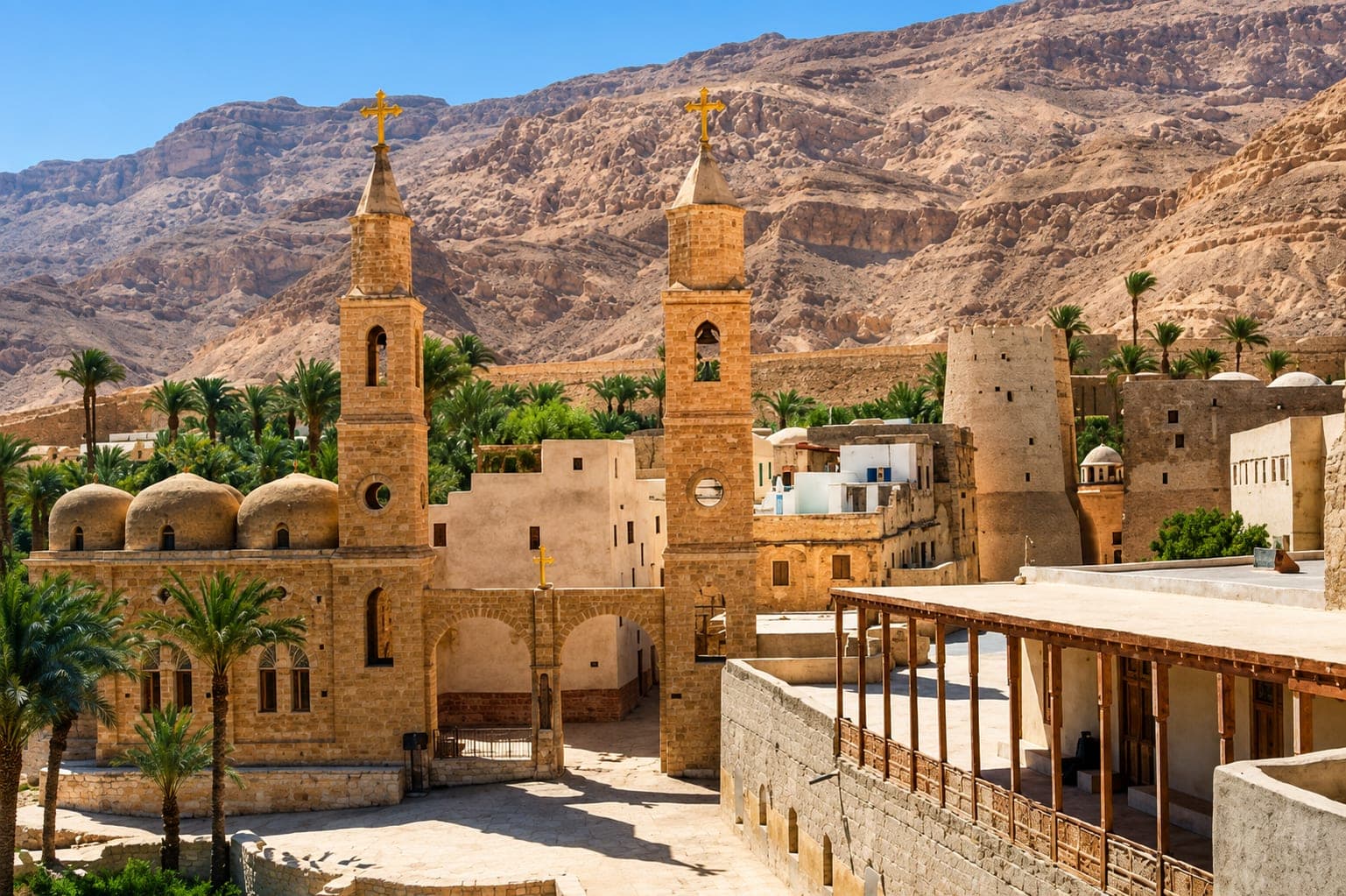
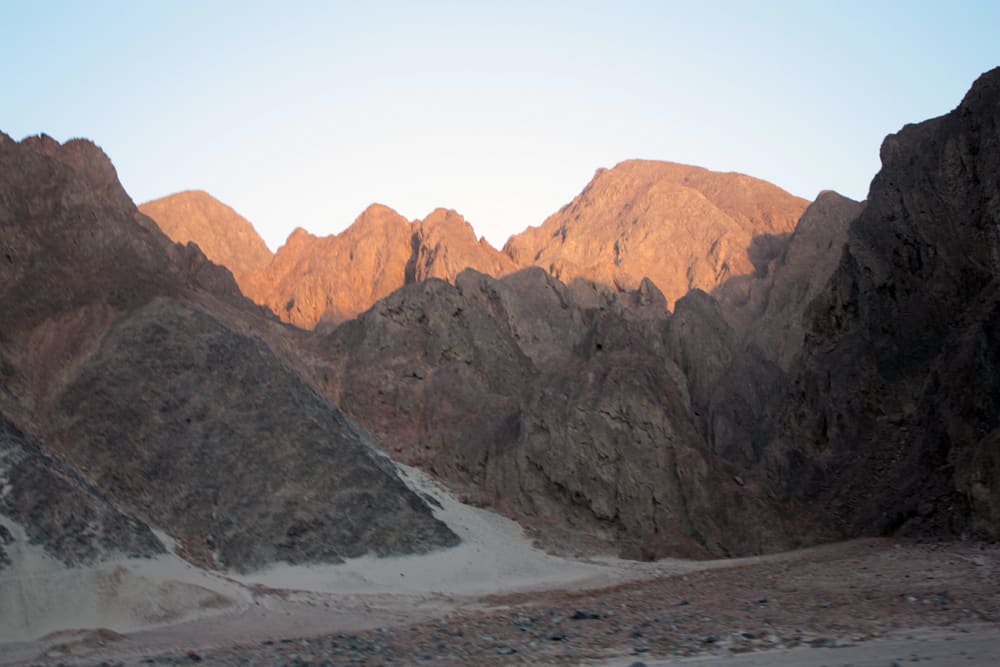
Two monasteries sit in the Eastern Desert between the Red Sea coast and the Nile, about fifty kilometres apart as the crow flies and rather further by road. They are among the oldest continuously used Christian buildings anywhere, they are still working monasteries with monks living in them, and almost nobody on a Red Sea holiday knows they are there. It is the most interesting day trip from Hurghada that is not about a beach or a pharaoh.
Paul first, then Anthony
The order matters, and most accounts get it backwards.
Paul the Anchorite — Paul of Thebes — is remembered as the first Christian hermit. He went into the desert to escape persecution and, by tradition, lived in one cave for more than eighty years. He founded nothing. He had no rule, no followers, no community. He simply left.
Anthony the Great came after him and is the one history calls the father of monasticism, because he was the one others followed. Men went into the desert to be near him, and what grew around that became the model for monastic life in both the Eastern and Western churches. Anthony himself kept trying to get further away from it.
So the two monasteries are not two versions of the same thing. One is built over the cave of a man who wanted to be alone and succeeded. The other grew out of a man who wanted to be alone and failed.
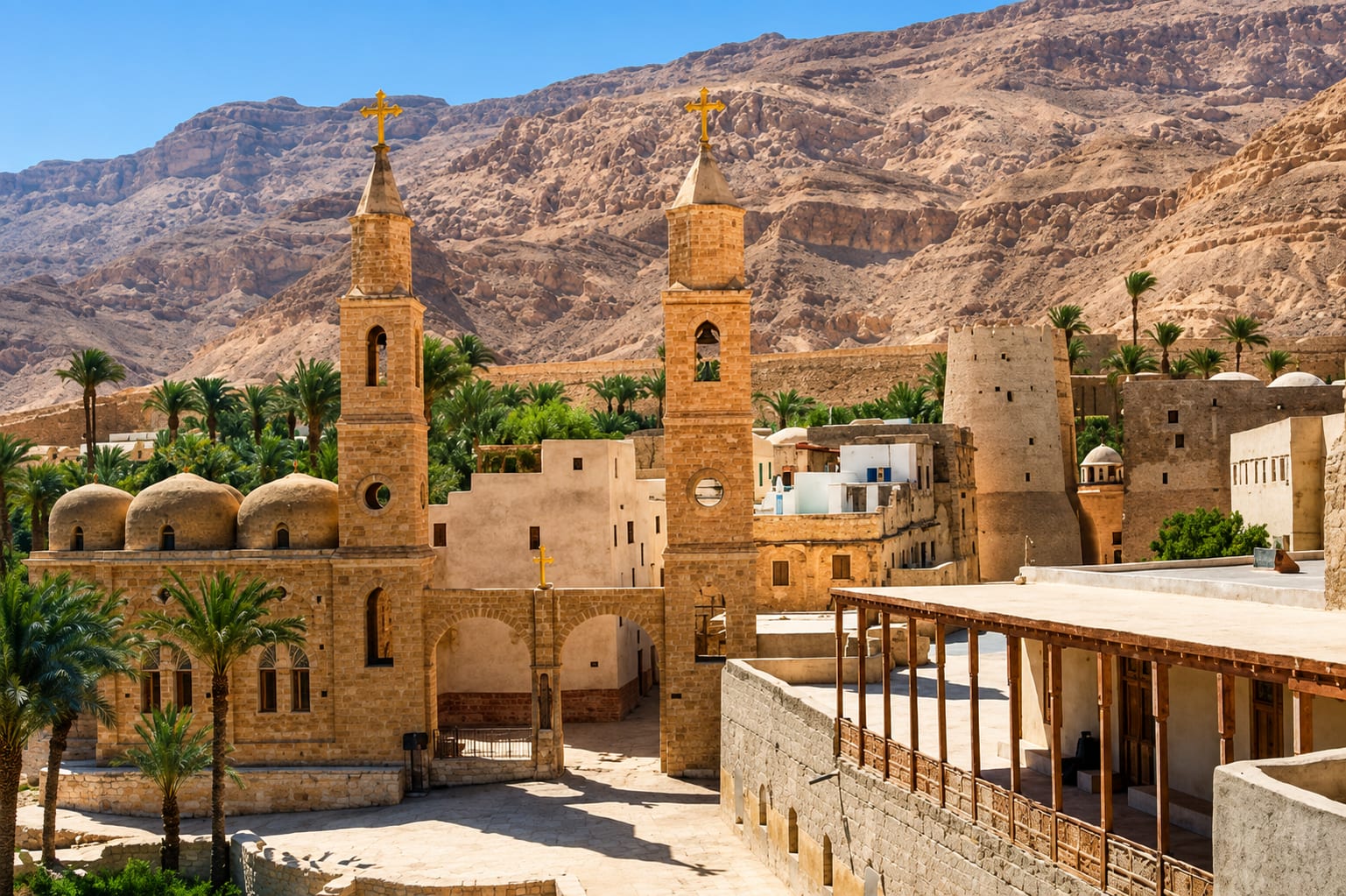
The Monastery of St Anthony in the Eastern Desert
St Anthony's
It does not look like a monastery from outside. It looks like a walled village — which is what it is, and what it had to be: high blank walls, a spring, gardens, a mill, a bakery, several churches and a keep you could withdraw into. Desert monasteries were raided for centuries and the architecture is a direct answer to that.
It was founded in the fourth century by men who had followed Anthony into the desert. You will see specific founding years quoted; we are not printing one, because the sources that give them contradict each other and a number that cannot be defended does not belong in a travel article.
The paintings are the thing. The Church of St Anthony is covered in wall paintings, the oldest from the seventh and eighth centuries and the newest from the thirteenth. For most of the twentieth century they were under centuries of soot and overpainting. Between 2002 and 2010 the American Research Center in Egypt worked with Egypt's Supreme Council of Antiquities to clean and stabilise them, and what came out from under the grime is one of the most important surviving bodies of medieval Coptic painting. Mounted warrior saints, abbots, Christ in majesty — in colours nobody alive had seen.
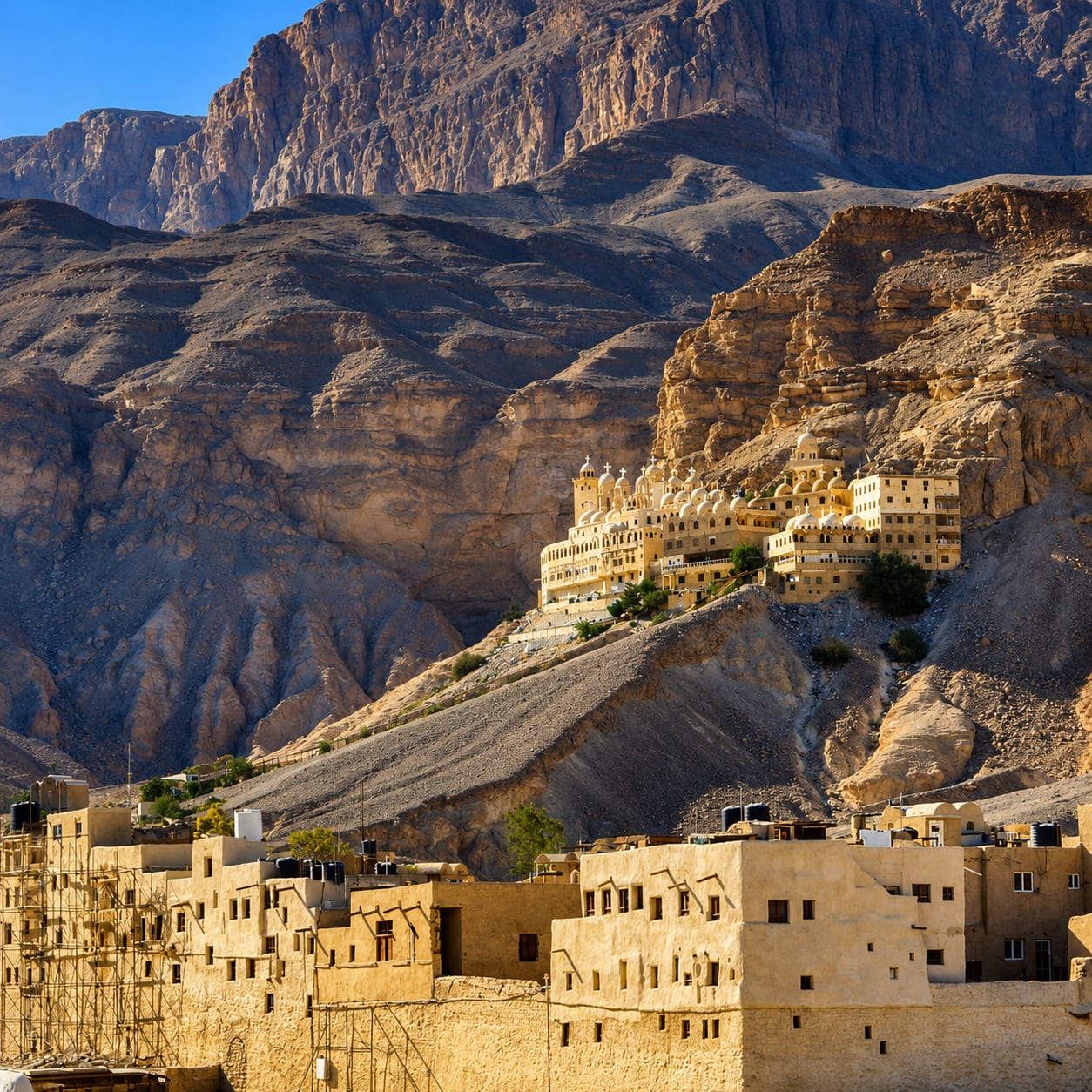
Inside the monastery walls
The library holds around 1,863 Coptic manuscripts, the largest such collection in Egypt, alongside the printed books. You do not get to handle them, but knowing what is in the room changes how the room feels.
Book what you just read about
Tours from this article — private, with a licensed guide, and priced per person.