
Planning · Sep 3, 2026
The 2027 total solar eclipse over Luxor: six minutes of darkness above the Valley of the Kings
2 August 2027 — the longest totality on easily reached land this century, directly over ancient Thebes.
Helios Travels Team
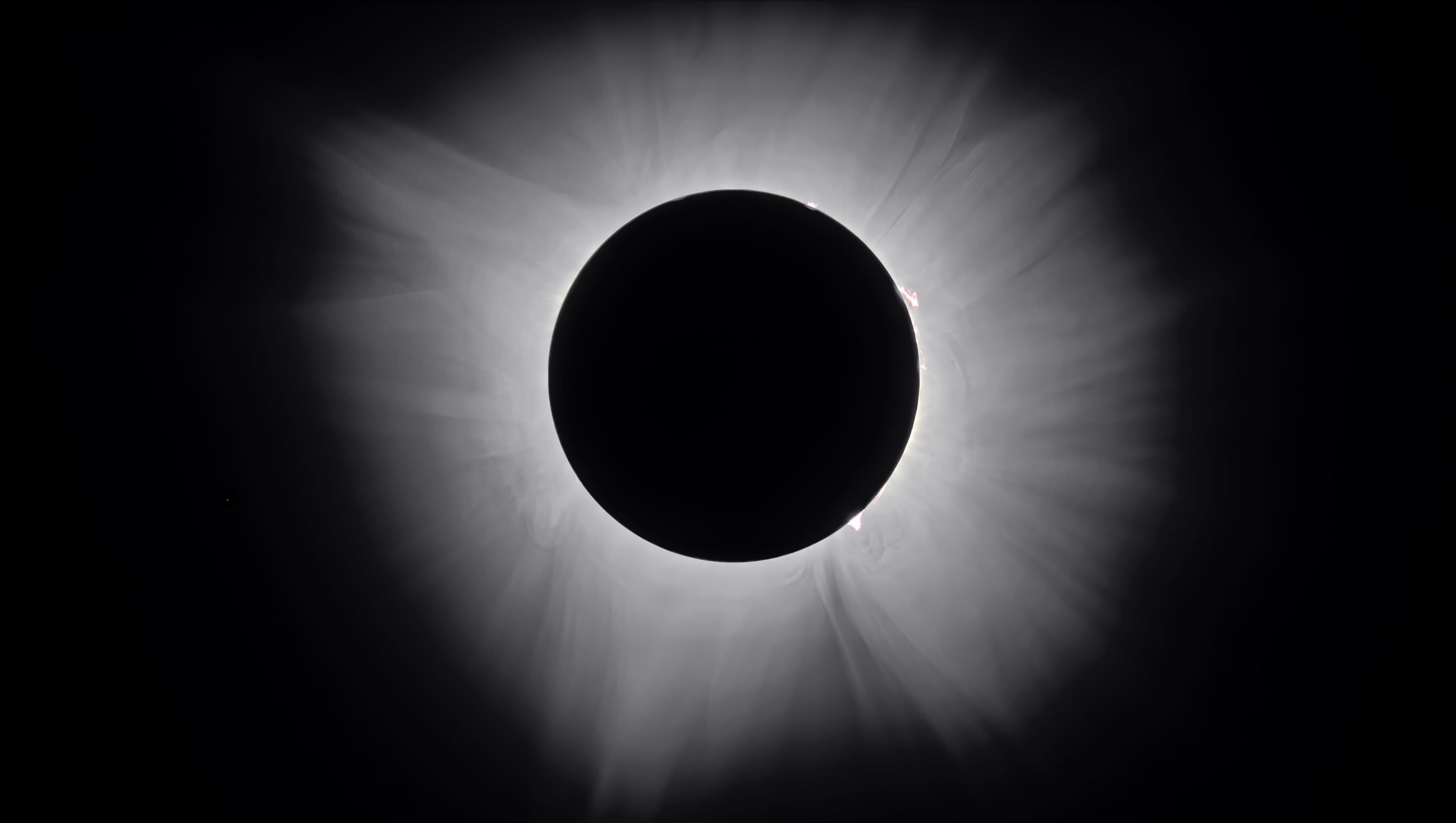
On Monday 2 August 2027, the Moon's shadow crosses Egypt and the sun goes out over Luxor for six minutes and twenty-two seconds.
That number is the whole story. Most total eclipses give you two or three minutes. This one is the longest totality anywhere on easily reached land this century, and the longest anywhere on Earth until 2114. It happens directly above the greatest concentration of ancient monuments in the world.
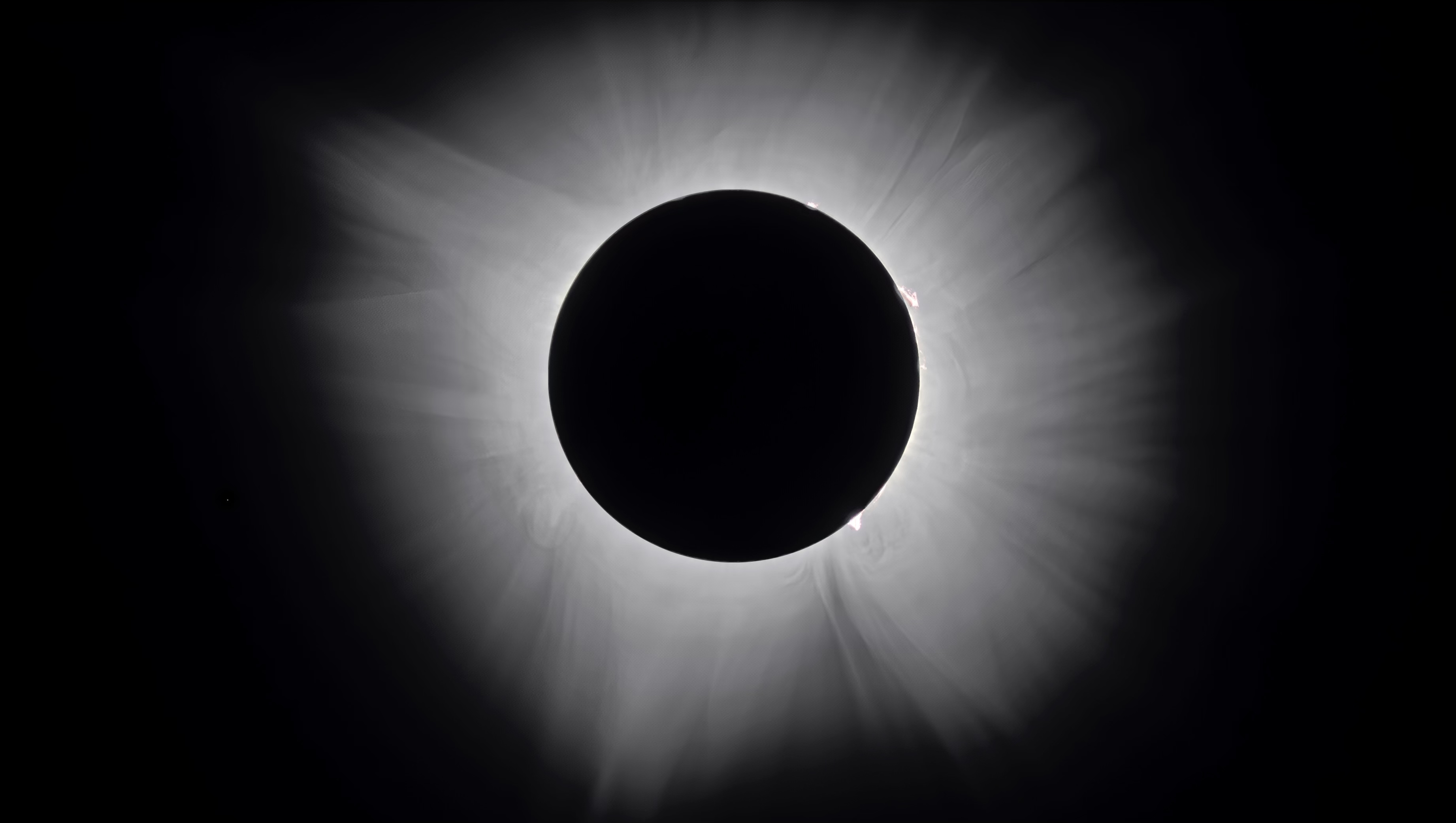
The corona during the total eclipse of 8 April 2024. Photo: Brucewaters, CC BY 4.0, via Wikimedia Commons
The essentials
| Date | Monday 2 August 2027 |
|---|---|
| Type | Total solar eclipse |
| Totality at Luxor | 6 minutes 22 seconds |
| Maximum eclipse | 13:05 local time — roughly 13:02 to 13:09 |
| Width of the shadow | 258 km |
| Sun's position | High overhead, close to midday |
| Cloud risk in August | Very low — historically around 1–20% |
Confirm exact local timings closer to the date; the partial phases begin over an hour before totality and end over an hour after.
Why Luxor, of all places
Eclipse chasers pick their spot on two things: how long totality lasts, and how likely it is that a cloud ruins it. Luxor wins on both at once, which almost never happens.
The point of greatest duration sits about sixty kilometres south-east of the city, so Luxor itself gets within a couple of seconds of the maximum. And Upper Egypt in August is one of the most reliably cloudless places on the planet. Eclipse chasers routinely fly to remote ocean islands and gamble on weather. Here the gamble is close to removed.
Karnak — 134 columns in the Great Hypostyle Hall, built for Amun-Ra, the sun god
The part that gives people chills
The ancient Egyptians built their entire cosmology around the sun. Ra crossed the sky by day and travelled through the underworld by night, to be reborn each dawn — and the temples at Luxor are that belief in stone. Karnak was the estate of Amun-Ra. The tombs in the Valley of the Kings are decorated, wall to ceiling, with the sun's journey through the twelve hours of darkness.
On 2 August 2027, the sun will go out above all of it, in the middle of the day, for six minutes.
No one needs to embroider that. It is simply going to be one of the most extraordinary things anyone alive will watch.
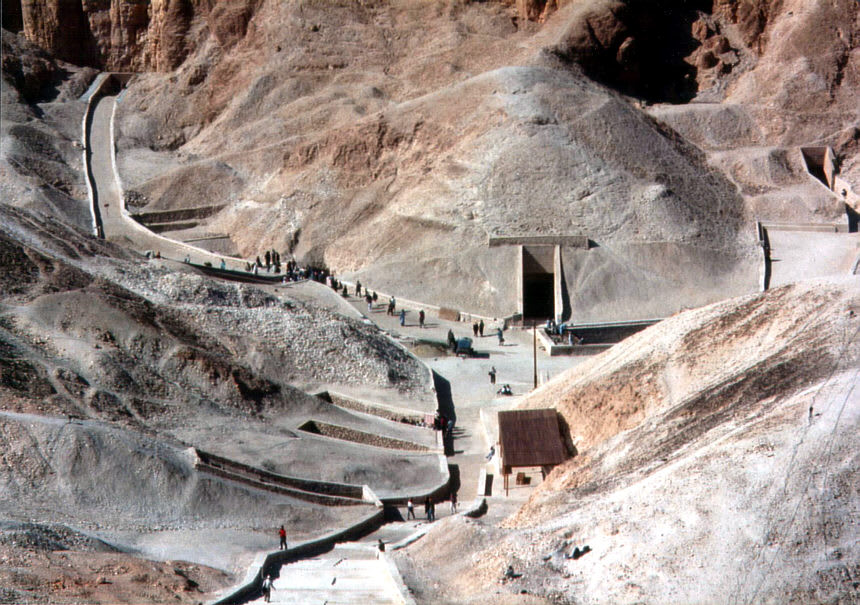
The Valley of the Kings — tombs painted with the sun's nightly passage through the underworld
What actually happens, minute by minute
If you have never seen a total eclipse, the partial phase is not the event. It is the preamble, and it is genuinely strange:
- The hour before. Through your eclipse glasses the sun is a shrinking crescent. To the naked eye almost nothing seems wrong, though the light turns oddly thin and metallic.
- Ten minutes out. Shadows go razor-sharp. Look under a palm tree — the gaps between leaves act as pinholes and scatter hundreds of crescent suns across the ground.
- The last minute. The temperature drops noticeably. Birds go quiet. A wall of darkness comes at you across the desert from the west, faster than feels reasonable.
- Totality. The last bead of sunlight snaps out. The corona appears — a pearl-white halo you cannot photograph properly and will never forget. Only now can you look without a filter. Stars come out. The horizon glows sunset-orange in every direction at once.
- Six minutes later. A single point of light returns on the opposite edge. Glasses back on, immediately.
Protecting your eyes — this part is not optional
Looking at the partially eclipsed sun without proper protection can damage your retina permanently, and it does not hurt while it happens.
- Use eclipse glasses or a viewer certified to ISO 12312-2. Buy from a reputable supplier well in advance.
- Sunglasses do not work. Neither does smoked glass, exposed film, a CD, or stacked sunglasses.
- Cameras, phones and binoculars need their own solar filter on the front. Pointing an unfiltered lens at the sun will destroy the sensor, and looking through unfiltered binoculars will injure you far faster than the naked eye.
- The only safe moment to look directly is during totality itself, when the sun's disc is completely covered. Glasses go back on the instant the first bead of light returns.
- Supervise children closely throughout the partial phases.
August in Luxor: be honest about the heat
Totality falls near the hottest hour of the hottest month. Expect 40 °C and above, in open desert, with the sun almost overhead.
- Choose a viewing spot with shade you can retreat to between the phases
- Drink far more water than feels necessary, starting the day before
- Hat, loose long sleeves, high-factor sunscreen
- Plan the rest of the day around the eclipse, not the other way round — the temples are best very early or after five
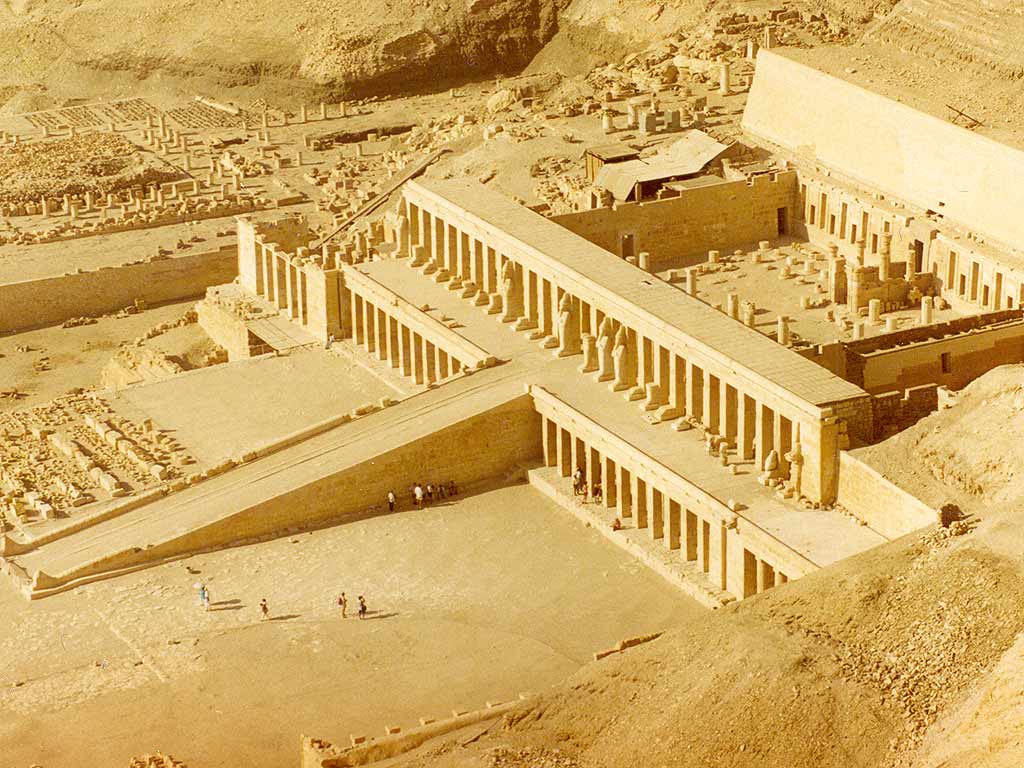
Deir el-Bahari — no shade at all on the terraces, which matters in August
Where to watch from
The path of totality is 258 kilometres wide, so the whole Luxor area is comfortably inside it. You are not chasing a knife-edge line; you are choosing a view.
- The west bank — open ground with the Theban cliffs behind you, and space to see the shadow arrive across the desert
- A Nile boat or a rooftop — an unobstructed horizon in every direction, which is what makes the 360° sunset glow work
- Out of town — towards the centreline south-east of Luxor, and away from the crowds
Whatever you choose, be in position long before totality. Moving through Luxor that lunchtime will not be quick.
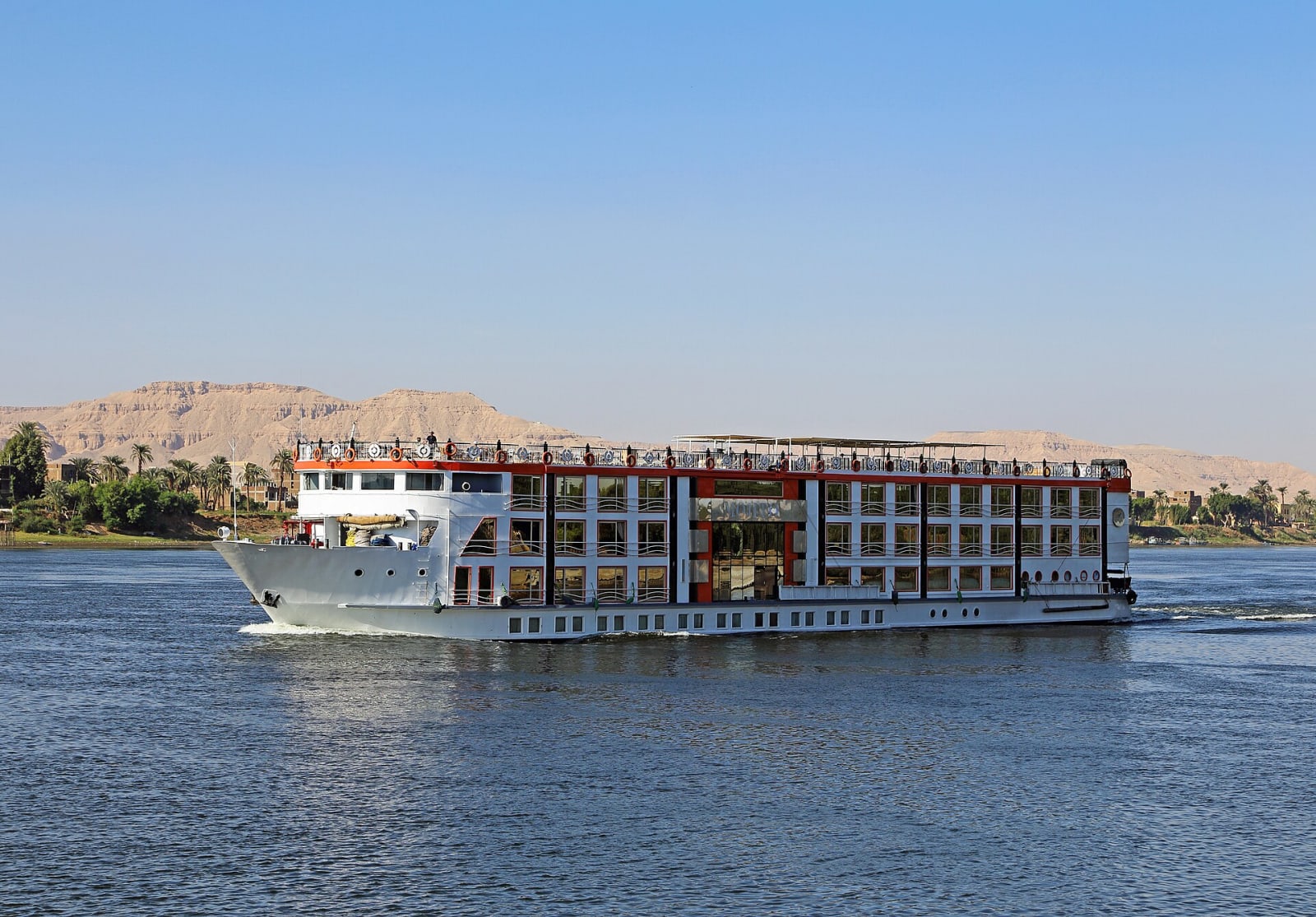
An open river horizon is one of the best places to watch the shadow arrive
Book earlier than feels sensible
This is the practical warning. Luxor has a finite number of hotel rooms and cruise cabins, and eclipse travellers book years out — many were reserved before 2026 was over. Flights into Luxor for that week will be scarce and expensive.
If you intend to be here for it, arrange your accommodation and internal travel now, and plan to arrive several days early. A tight connection on 1 August is not a plan; a delayed flight means you miss an event that does not repeat for ninety years.
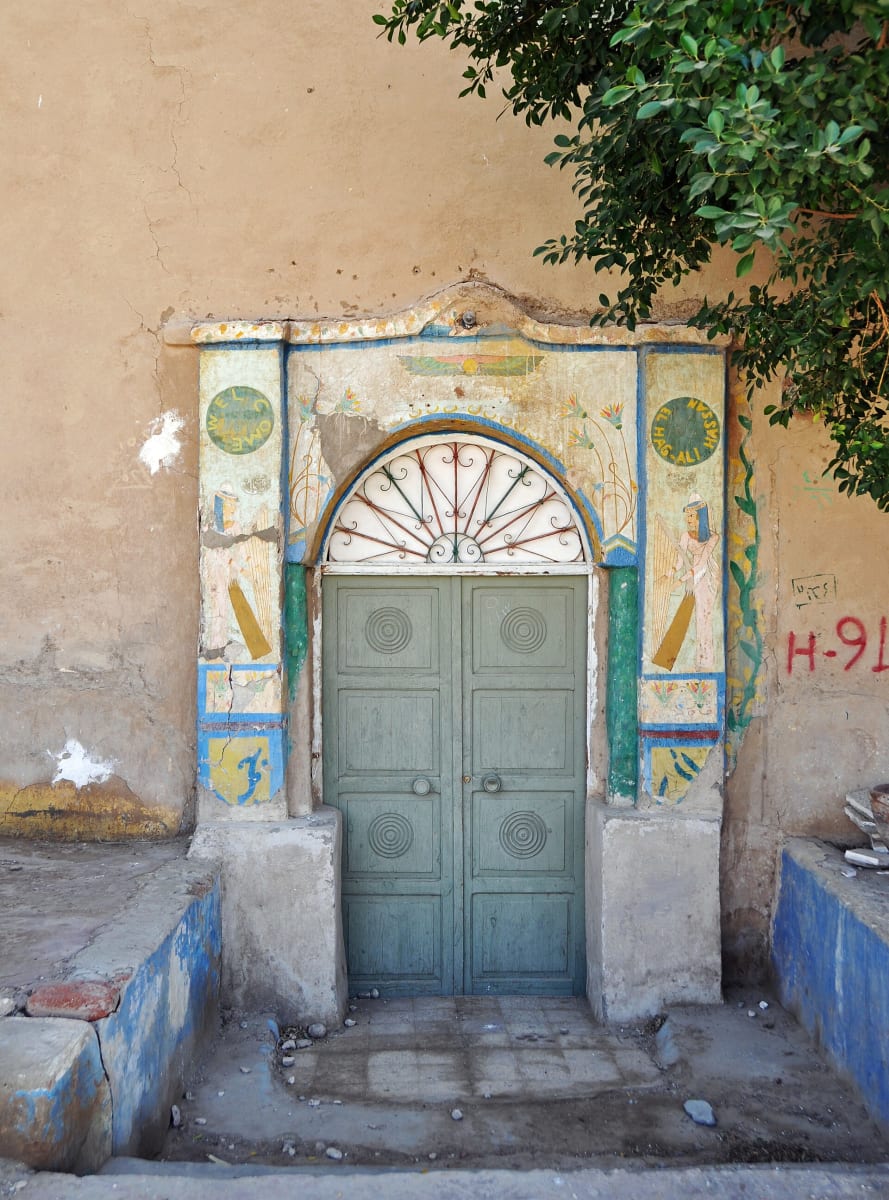
Medinet Habu — one of many west bank sites that will be extraordinary in eclipse light
Make it a trip, not a day
Six minutes is a long totality and a short holiday. Most people coming this far build a week around it — the Theban west bank, a few nights on the Nile between Luxor and Aswan, Abu Simbel, and the Red Sea afterwards for the heat.
We are based in Hurghada and we run Luxor year-round. If you want help putting the days either side together — where to be at 13:05, and what to do with the rest of the week — tell us what you have in mind and we will build it around the eclipse.
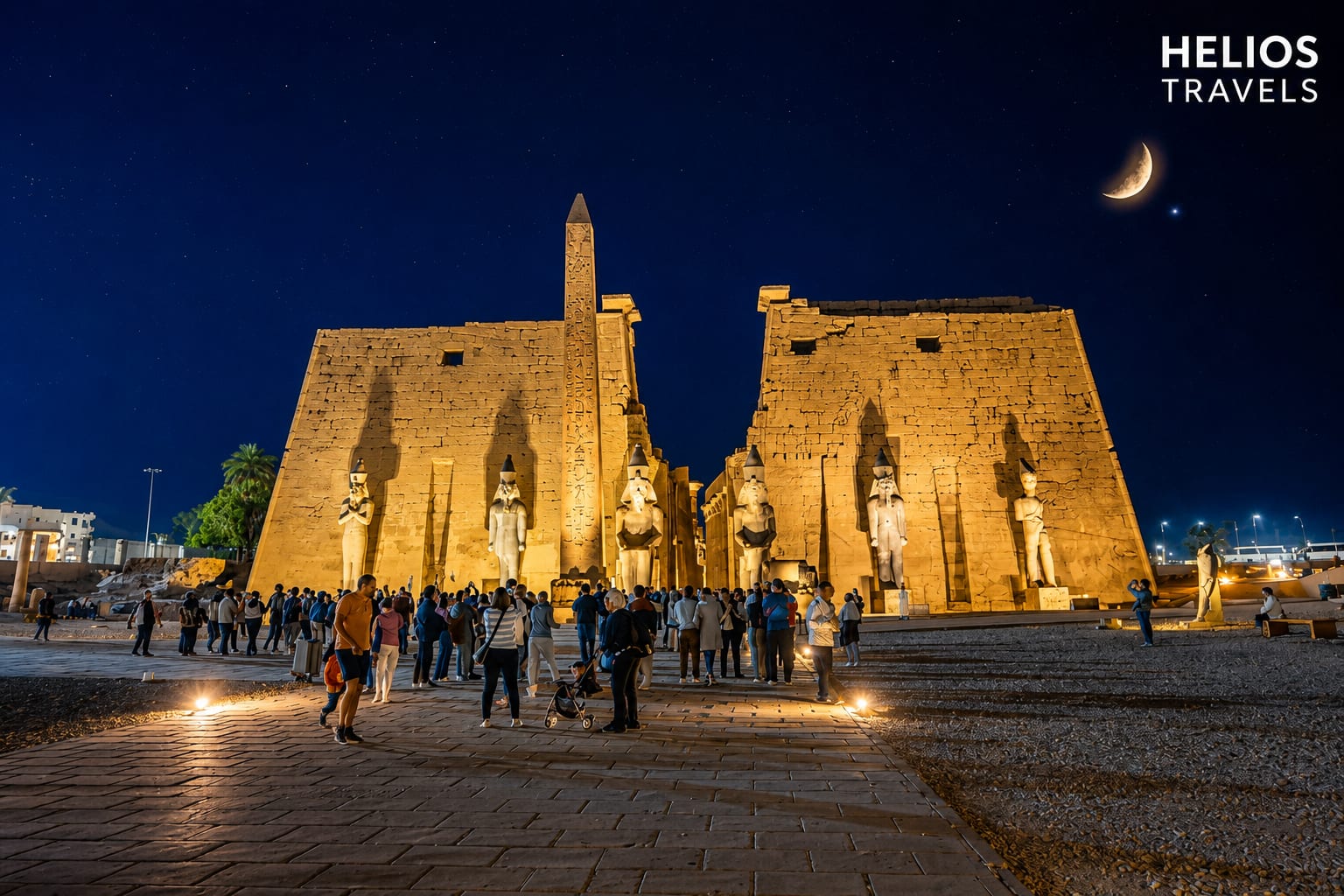
Luxor Temple at dusk — the week around the eclipse is worth building properly