Nile & Luxor · Sep 5, 2026
Nefertari's tomb costs extra. Here's whether to pay it
The finest painted tomb in Egypt, a few minutes inside, and a capped daily list. Worth it for some travellers and genuinely not for others.
Helios Travels Team
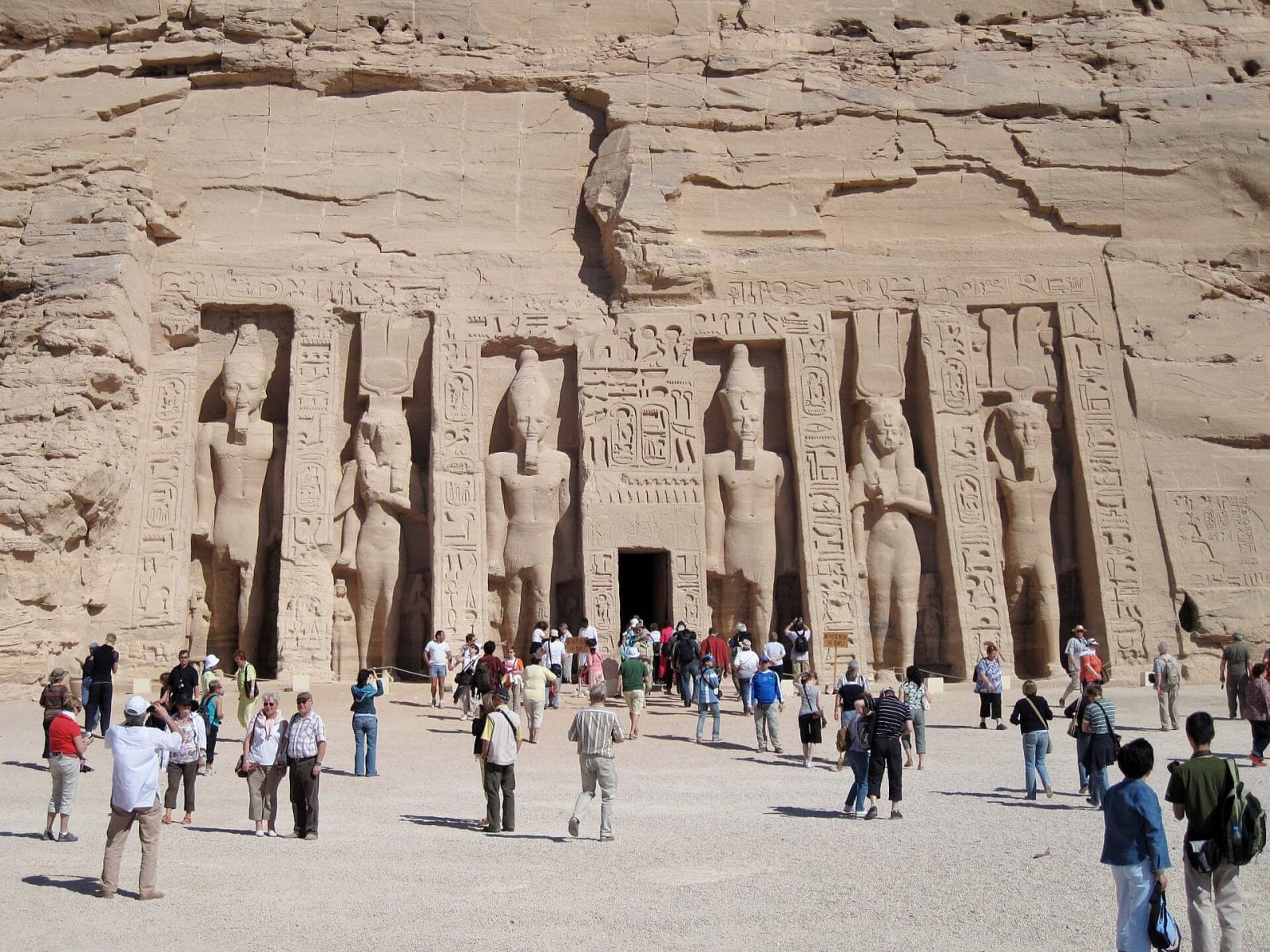
Nefertari's tomb carries the steepest ticket of any single room in Egypt, you are allowed inside for a matter of minutes, and the number of visitors admitted each day is capped.
People ask us constantly whether it is worth it. The answer is genuinely yes for some travellers and genuinely no for others, and the deciding factor is not money.
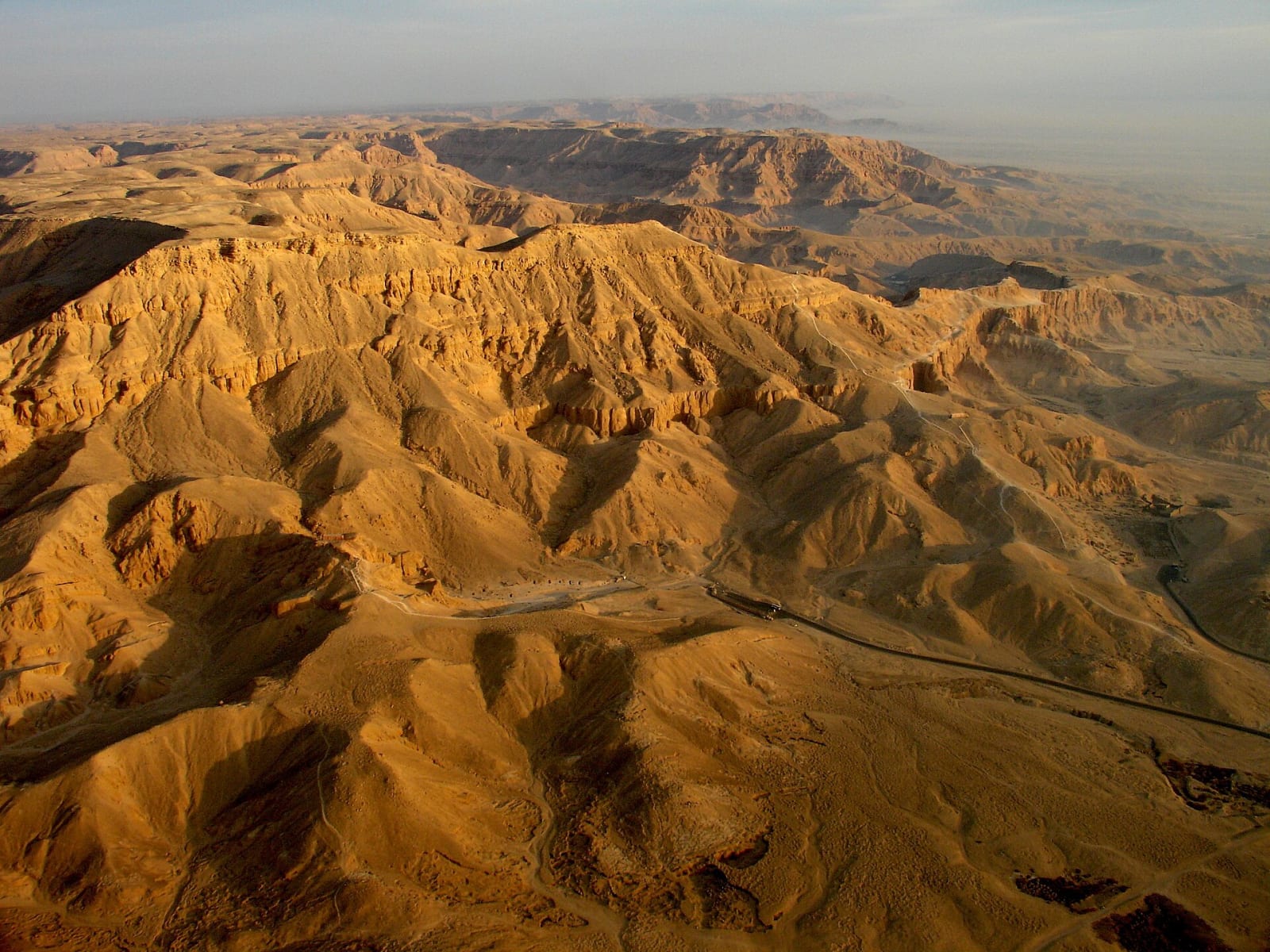
The dry valley and tomb entrances at the Valley of the Queens
First, a correction that matters for planning
Nefertari's tomb is not in the Valley of the Kings. It is QV66, in the Valley of the Queens, a separate site about two kilometres away with its own entrance and its own tickets.
This trips up a surprising number of itineraries. If a tour promises the Valley of the Kings and you were expecting Nefertari, you are going to the wrong valley. Ask specifically, and check that the extra ticket is either included or that there will be time and cash to buy it.
What is actually in there
Nefertari was the Great Royal Wife of Ramesses II, and the tomb he built for her around the thirteenth century BC is, by common agreement among people who study this material, the finest painted tomb in Egypt.
What makes it different from the royal tombs across the hill:
- The colour is intact. Not faded, not partial — deep blues, gold, dense reds and greens across the walls and ceilings, at a saturation nothing in the Valley of the Kings matches.
- It is painted, not carved-and-painted. The limestone here was poor, so the artists laid plaster over it and painted onto that, which produced a softer, more fluid line than relief allows.
- Nefertari herself is everywhere, in a fine linen dress and a vulture headdress, being led by the hand through the underworld by one god after another. The figures have a delicacy that reads as portraiture rather than convention.
- The ceilings are night skies — gold stars on deep blue, over every chamber.
It was found by Ernesto Schiaparelli in 1904, already robbed. The tomb's problem afterwards was not looting but salt: moisture moving through the rock crystallised behind the plaster and lifted the paint. The Getty Conservation Institute worked on it from 1986 to 1992, and the reason your visit is short and the daily numbers are limited is that humidity from human breath is exactly the thing that damaged it.
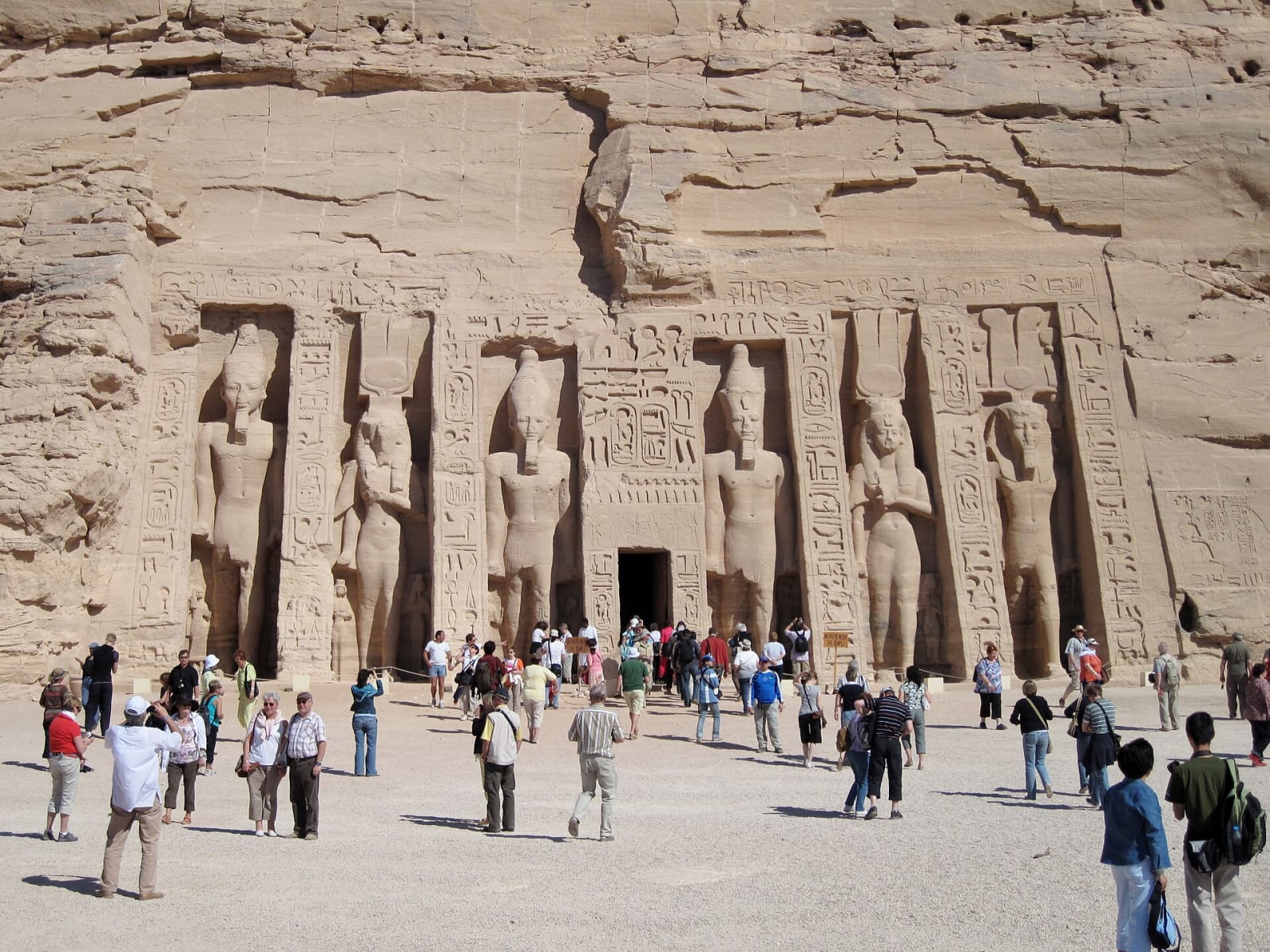
Painted wall decoration in the tomb of Nefertari, Valley of the Queens
The honest case against
Four reasons people come out disappointed, all of them predictable:
It is short. Visits are strictly time-limited — a matter of minutes rather than an hour. You cannot linger, sit, or come back later in the day. For a ticket at this price, that ratio bothers some people enormously and they are not wrong to feel it.
It is small. This is one tomb of moderate size, not a long descending corridor system. If your mental image is the scale of Seti I, adjust it.
Photography is restricted. Rules change, and where photography is allowed at all it carries its own fee. Do not plan the visit around getting pictures.
It closes. Access has been suspended for conservation more than once in its history, and daily caps mean a walk-up on a busy day may find it sold out. Check before you build a day around it.
The honest case for
There is nothing else like it. That sounds like brochure language and it is simply true — this is the highest-quality surviving ancient Egyptian painting, and photographs do not carry it. The colour in a photograph is a record; the colour in the room is an experience.
Ten minutes is enough to be changed by it. The people who come out glad are, almost without exception, the ones who went in having decided in advance not to hurry, not to photograph, and to look at three things properly rather than all of it badly.
The alternative is regret. If Egypt is a once-in-a-lifetime trip and ancient art is why you came, the cost of skipping it is that you will read about it later and wish you had.
So: should you buy it?
Yes, if ancient art or painting is genuinely one of your reasons for coming; this is your one trip to Egypt and the budget can absorb it; or you have already seen the Valley of the Kings and want to know what the very best looks like.
No, if the same money would buy two extra days in Luxor — two days is a bigger upgrade to a trip than ten minutes in any single room; you are travelling with children who will not get it; or you are already stretching and would resent the price afterwards. Resenting a ticket ruins the room.
Instead, consider: the rest of the Valley of the Queens is quiet, cheap and genuinely lovely — the tombs of Ramesses II's sons, smaller and brightly painted, with almost nobody in them. And KV9 (Ramesses V and VI) across the hill, at a fraction of the price, has the best-preserved painted ceiling in the Valley of the Kings and no time limit on how long you stand under it. If you can buy only one supplement in Luxor, that is the one we recommend.
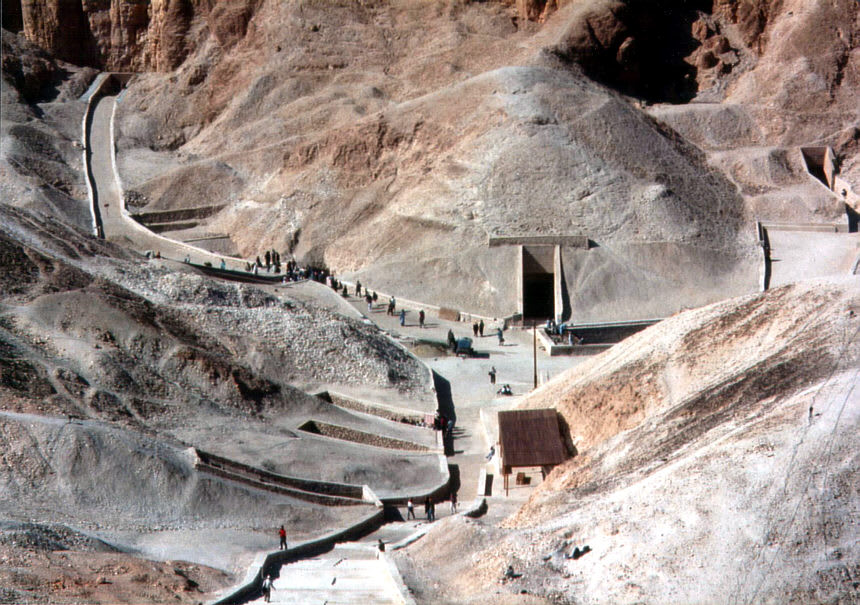
The dry limestone valley and tomb entrances at the Valley of the Kings
The rest of the Valley of the Queens
Whatever you decide about QV66, do not treat this valley as a single tomb with a car park attached. The general ticket is inexpensive, the site is quiet, and three tombs in it are worth the walk on their own.
They belong to sons of Ramesses III — princes who died young — and they are small, bright and unexpectedly moving. The decoration shows the king leading his boy through the underworld, introducing him to each god in turn, with the child painted at his father's side wearing the sidelock of youth. The colour is strong, the chambers are close, and because almost nobody comes here you can stand in them for as long as you like.
That last point is worth weighing against Nefertari. Ten minutes in the finest tomb in Egypt, or an unhurried hour in three very good ones. Some travellers get more from the second, and there is no snobbery in choosing it.
The valley is also the practical answer if the Nefertari list is full when you arrive, which on a busy morning it will be.
Painted chamber in one of the smaller tombs of the Valley of the Queens
If you do go, do it properly
- Buy the ticket at the Valley of the Queens entrance, and go early — daily numbers are limited and the caps are enforced.
- Decide before you enter what you want to look at. The descending corridor with Nefertari being led by Isis, the ceiling, and the burial chamber. Three things.
- Do not photograph. Even where it is permitted, you will spend your minutes framing rather than seeing, and the pictures will be worse than the published ones.
- Do not touch the walls, or lean on them. The oils in one hand are enough, and this is the tomb where that matters most.
- Go in cool, not sweating. Your own body heat and breath are the conservation problem. Arriving straight from a hot walk makes it worse.
- Pair it with Medinet Habu or Deir el-Medina, both minutes away and both quiet, so the morning has more in it than one short visit.
Book what you just read about
Tours from this article — private, with a licensed guide, and priced per person.
Luxor with a Difference — Medinet Habu, Valley of the Queens & Nefertari
14 hours · Hurghada
$110/ person
See the tourLuxor in 2 Days — Both Banks of the Nile Without the Rush
2 days · Hurghada
$250/ person
See the tourLuxor Day Tour — Karnak, Valley of the Kings & Free Nile Cruise
14 hours · Hurghada
$90/ person
See the tour