
Nile & Luxor · Sep 3, 2026
The Luxor west bank, in the order that beats the heat and the crowds
There is no shade anywhere out here, and the coaches all go to the Valley of the Kings first. Both facts point the same way.
Helios Travels Team
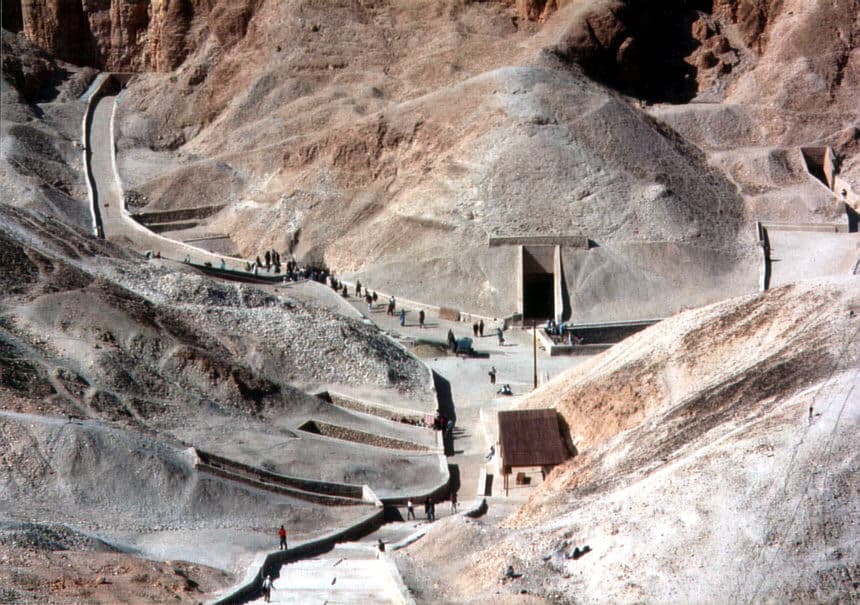
The Theban west bank has no shade, and by eleven in the morning it is thirty-eight degrees between the tomb entrances. Almost every disappointing Luxor day is a scheduling problem, not a sightseeing one.
Here is the order that beats both the heat and the coaches — and the reason each stop sits where it does.
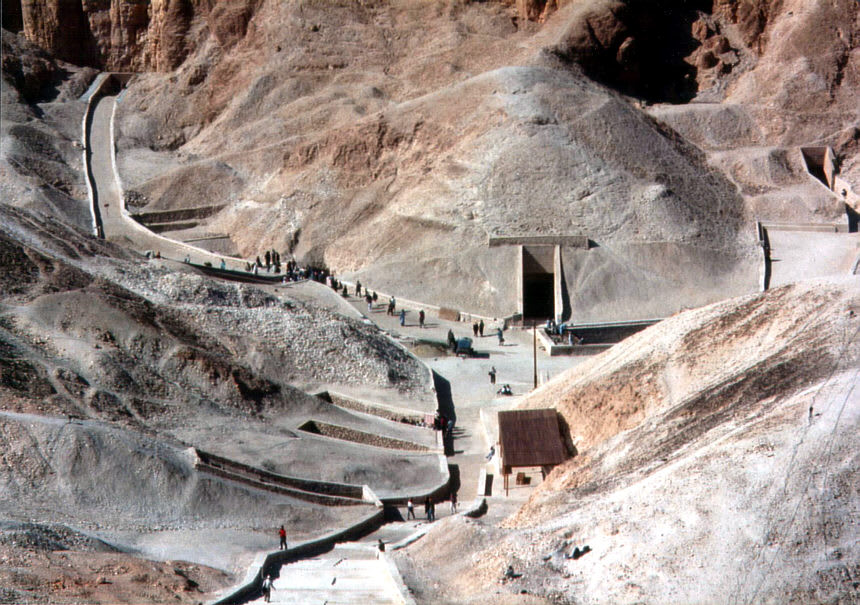
The dry limestone valley and tomb entrances at the Valley of the Kings
The two constraints that decide everything
Heat. There is essentially no shade anywhere on the west bank. The Valley of the Kings is a limestone bowl that traps and reflects; the tomb interiors are hot and airless rather than cool. From about ten o'clock the day stops being pleasant and by noon in summer it is genuinely hard.
Coaches. The big groups from the Red Sea resorts arrive as a block, and they arrive at the Valley of the Kings first. If you are inside the valley before they land you have it nearly to yourself; if you arrive with them you queue at every tomb.
Both constraints point the same way: be at the first gate when it opens. Everything else in this article follows from that one decision.
The order
1. Valley of the Kings, at opening. Non-negotiable and first. It is the hottest place on the itinerary, the most crowded later, and the one that most rewards being early. Buy every ticket at the main office before the shuttle — general admission covers three tombs, and Tutankhamun, Seti I and Ramesses V/VI are separate. Give it ninety minutes.
2. Hatshepsut's temple at Deir el-Bahari. Second, and this is where people go wrong: those famous terraces face east, so they take the morning sun full on, and there is no shelter anywhere on them. At nine it is spectacular. At eleven it is an oven with a queue. Forty-five minutes.
3. Medinet Habu or the Ramesseum. Now that the two headline stops are done, spend the rest of the morning somewhere with walls. Medinet Habu still has paint on its ceilings and a fraction of the visitors; the Ramesseum has the collapsed colossus that gave Shelley his poem. Either is a better hour than a third famous site.
4. Colossi of Memnon. Ten minutes, on the way past. They sit at the roadside and need nothing more.
5. Stop. By half past twelve you are done and should be eating somewhere with a fan.
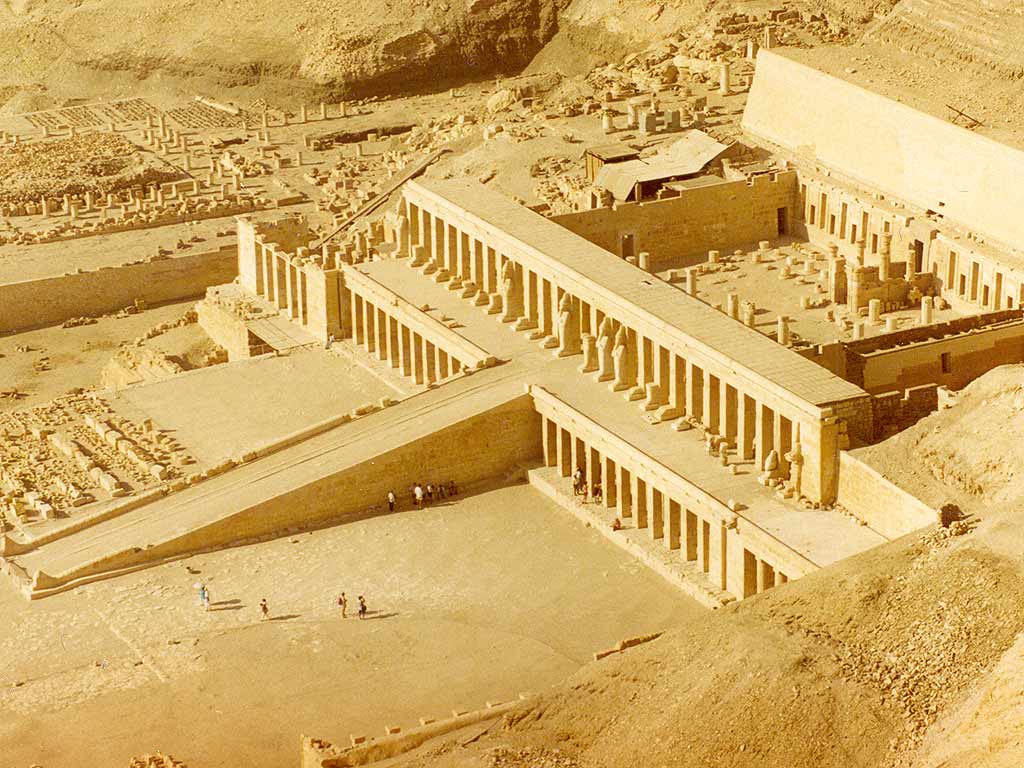
The terraces of Hatshepsut's temple at Deir el-Bahari below the cliffs
Why not the other order
Plenty of tours run Colossi → Hatshepsut → Valley of the Kings, because it is the geographic order coming from the ferry. It is the wrong order.
It puts the Valley of the Kings — the hottest, most crowded, most physically demanding stop — at eleven o'clock, which is precisely when you least want to be climbing into an unventilated corridor with forty other people. Doing it in reverse costs a few extra minutes of driving and buys you the two best hours of the day at the two hardest sites.
If you are on a fixed group itinerary you cannot change this. If you are on a private tour, ask for the reverse order when you book. Most guides will agree immediately, because they already know.
What to swap in if you have seen the headline sites
On a second visit — or if crowds are the thing you most want to avoid — the west bank has a quieter parallel itinerary that most day trips never touch:
- Valley of the Queens, for the smaller, brighter tombs of royal children and consorts. Nefertari's tomb is here and carries a steep separate ticket; the rest of the valley is quiet and cheap.
- Deir el-Medina — the village where the men who cut the royal tombs lived, with their own tombs above it. Small, superbly decorated, and the most human place on the west bank: these are the people who did the work.
- The Tombs of the Nobles, which show daily life rather than the afterlife — fishing, harvest, banquets, cattle counts. If the royal tombs start to feel repetitive, this is the antidote.
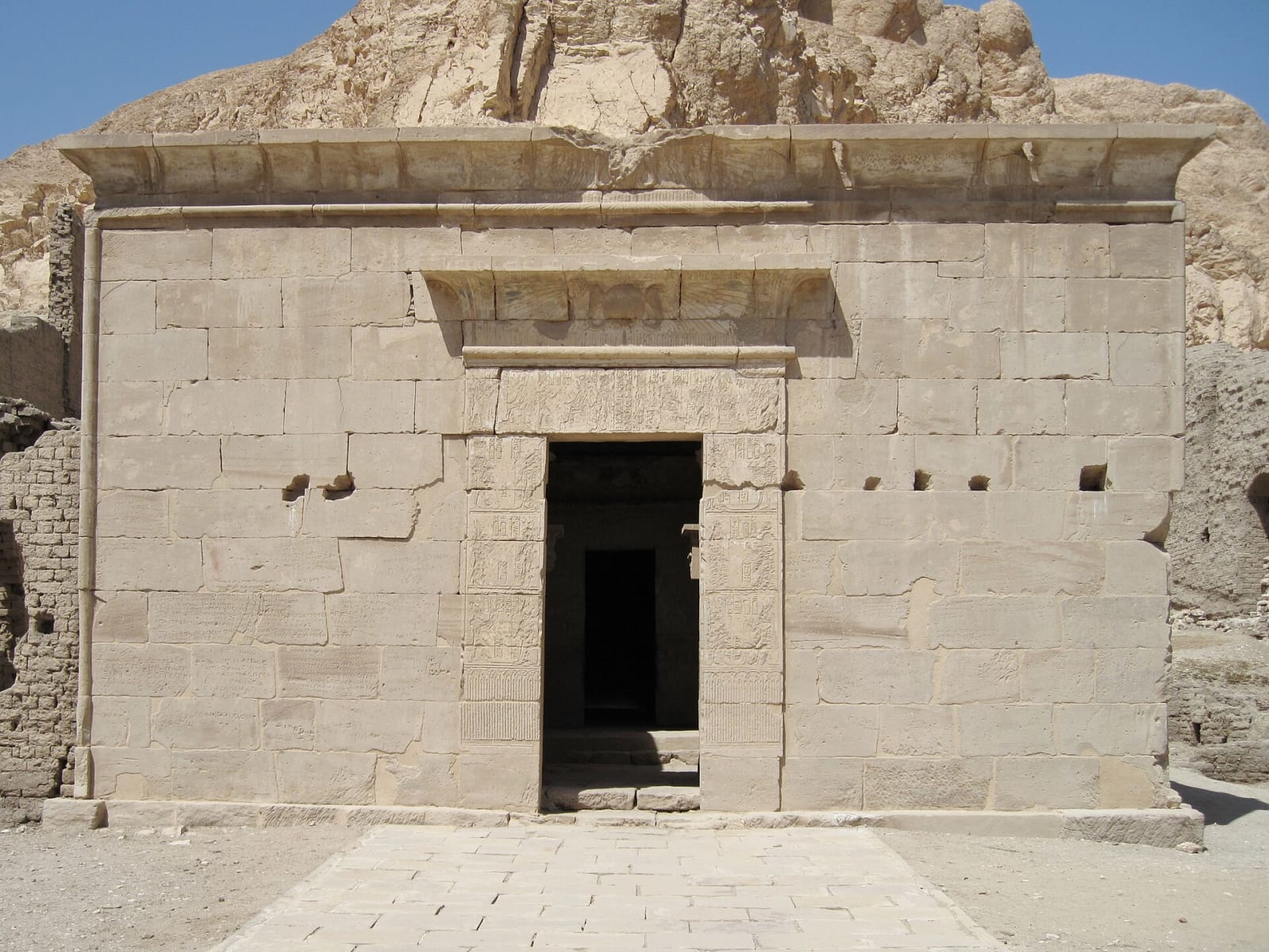
The excavated workers' village at Deir el-Medina on the Theban west bank
Adding the balloon
If you are staying overnight in Luxor, the balloon goes before all of this. Pick-up is in the dark, launch is around first light, and the flight is roughly three quarters of an hour over the west bank as the sun comes up on the temples you are about to walk around.
It does not conflict with the plan above — it precedes it. You land in time to be at the Valley of the Kings for opening, which makes for a long but exceptional morning. It also cannot be done on a day trip from the Red Sea, which is the single strongest argument for staying the night.
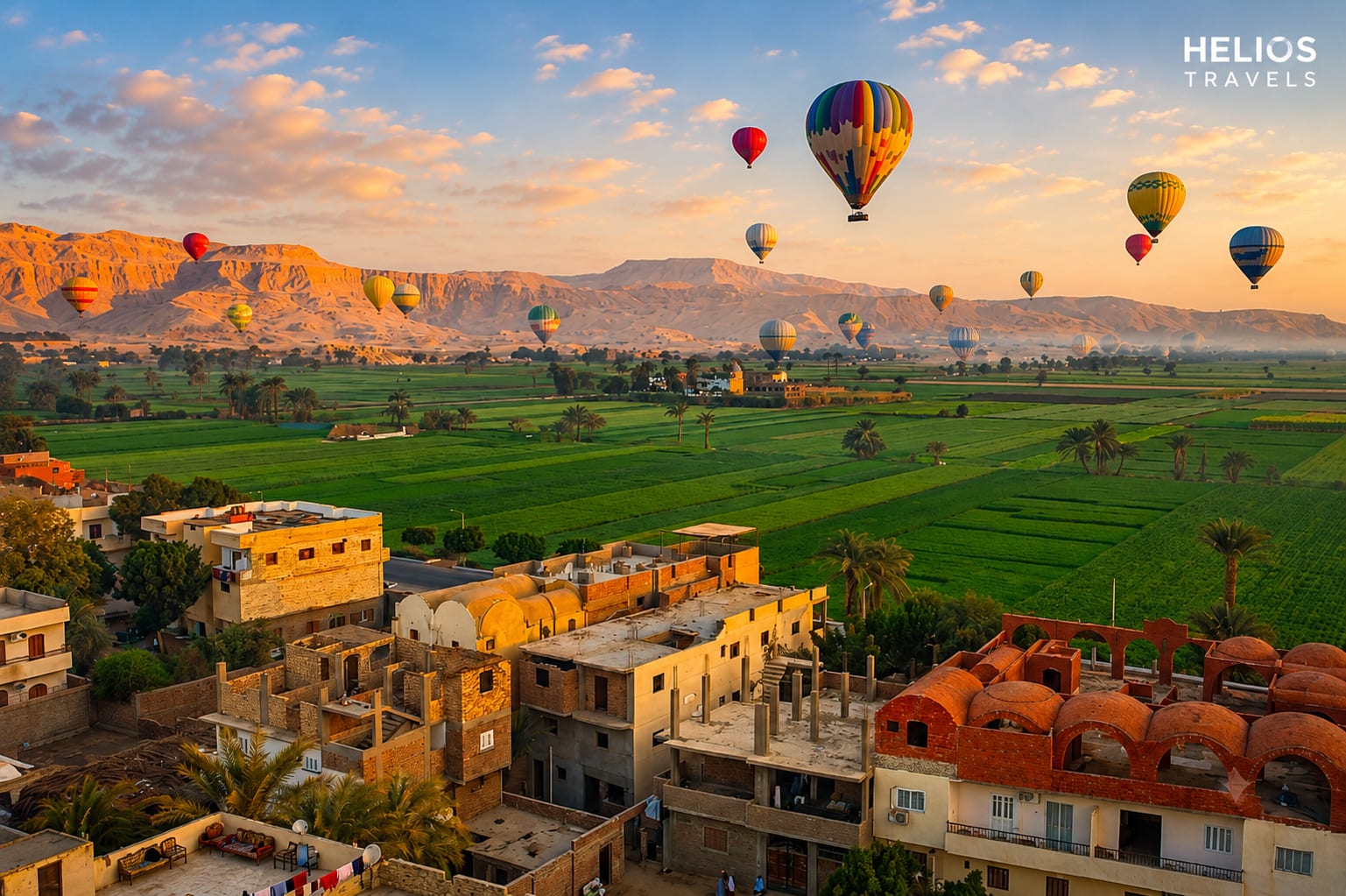
Hot air balloons over the Theban west bank at sunrise
Getting across, and where to eat
The west bank is a separate place from the town, and how you cross shapes the morning.
There are two crossings: the bridge, several kilometres south of the centre, which every coach and private car uses, and the local ferry from the corniche, which takes a few minutes and costs almost nothing. If you are on an organised trip you will use the bridge without thinking about it. If you are arranging your own day, the ferry plus a taxi on the far side is faster, cheaper and considerably more interesting — you cross with people going to work.
On the far side you need transport between the sites: they are spread over several kilometres of flood plain and desert edge, and walking between them is not realistic in the heat. Taxis wait at the ferry landing; agree the whole morning and the price before you get in, not stop by stop.
For food, the honest advice is to eat late rather than in the middle. The restaurants clustered near the Colossi and along the road to the ferry are geared to tour groups and busiest between twelve and one, which is exactly when you want to be sitting down. Finishing your sightseeing by half twelve and eating at one, after the coaches have moved on, gets you a better table and a calmer hour.
Practical notes
- Buy all tickets at the first office. Tomb supplements and the photography permit are not sold at the tombs, and walking back in the heat is a miserable way to learn that.
- Carry more water than you think. Two litres per person for the morning is not excessive.
- Hat, sunglasses, closed shoes. The valley floor is dust over rock and the tomb ramps are slippery.
- Do not touch the walls. The oils from one hand are enough to damage paint that has survived three thousand years, and breath humidity is why some tombs close for recovery.
- Take small notes. Guardians will offer to point things out, and a small tip is normal — but nobody should be unlocking a closed door for you.
- Plan nothing for the afternoon. The heat will have taken more out of you than you expect, and Luxor's east bank is better after five anyway.