Culture · Sep 9, 2026
Khan el-Khalili without the sales pitch
There are two markets in these streets, and almost everyone is only shown the one built for people with a coach waiting.
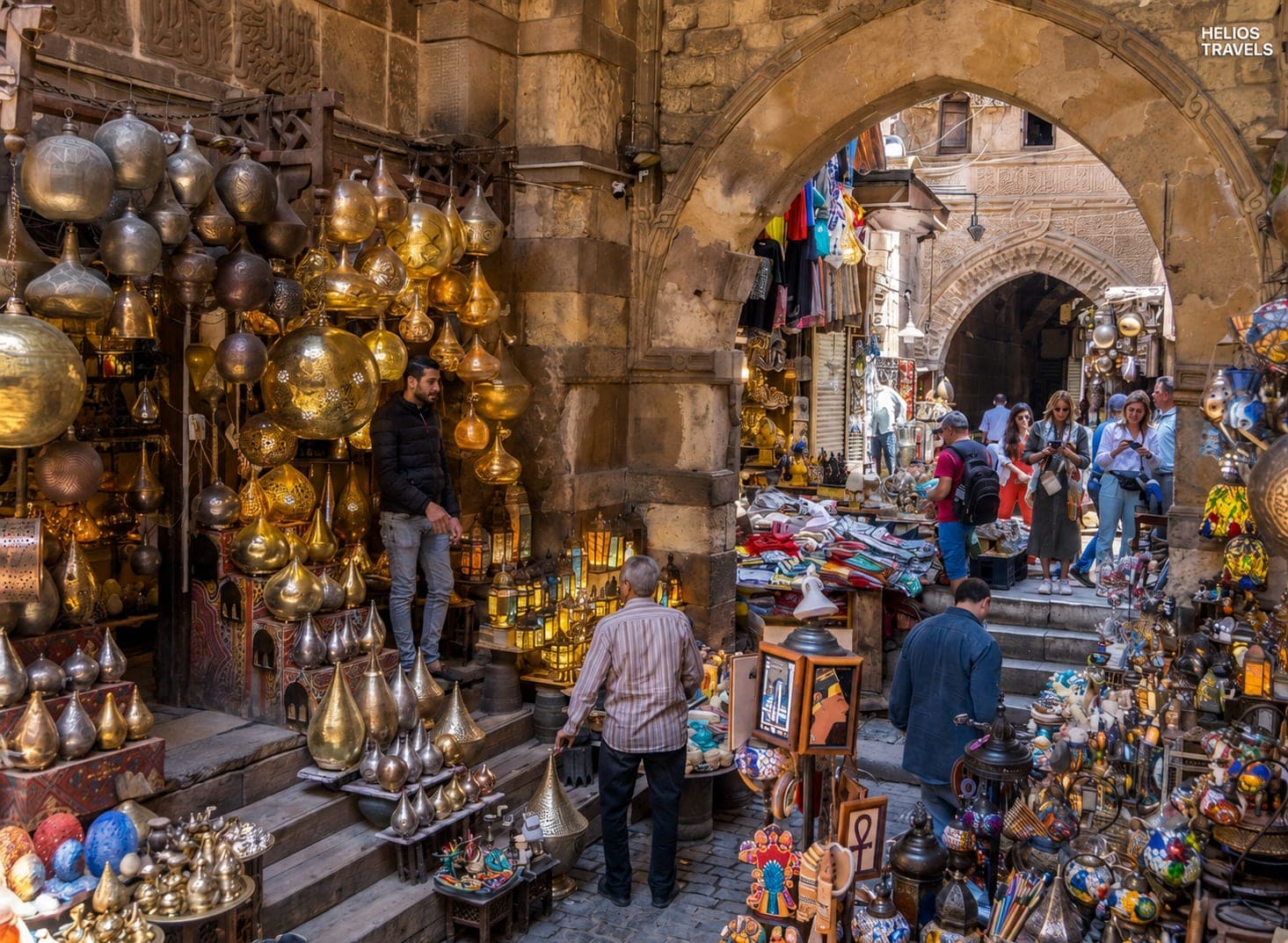
Khan el-Khalili is on every Cairo itinerary and is the part of the day most people describe afterwards as "a bit much". It does not have to be. The trick is knowing that there are two markets here occupying the same few streets, and that almost everyone is only shown one of them.
What it actually is
Khan el-Khalili was founded in 1382, when the emir Djaharks el-Khalili cleared a Fatimid burial ground and put up a caravanserai — a walled courtyard where merchants arriving with goods could stable animals below and sleep above. That is what a khan is. Cairo sat on the trade route between the Indian Ocean and the Mediterranean, and this was one of the places the route unloaded.
Six hundred and forty years later it is still a commercial district rather than a heritage site. That distinction matters more than anything else in this article. Nobody is preserving Khan el-Khalili for your benefit; it is a place where several thousand people go to work, and you are walking through their trading floor.
Understanding that removes most of the friction. The man calling to you is not harassing you, he is doing his job, in a market where calling to passers-by has been the method since the fourteenth century.
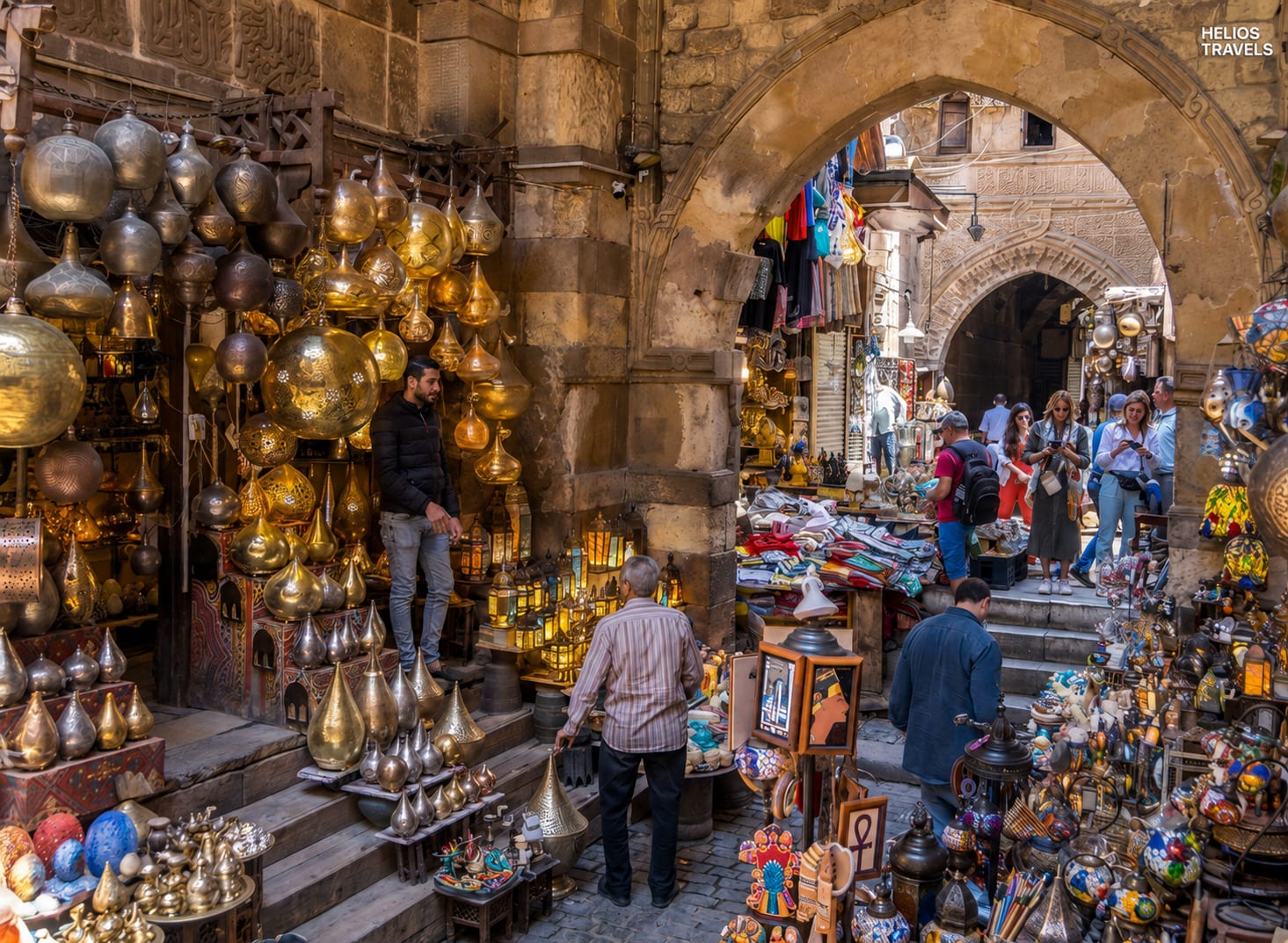
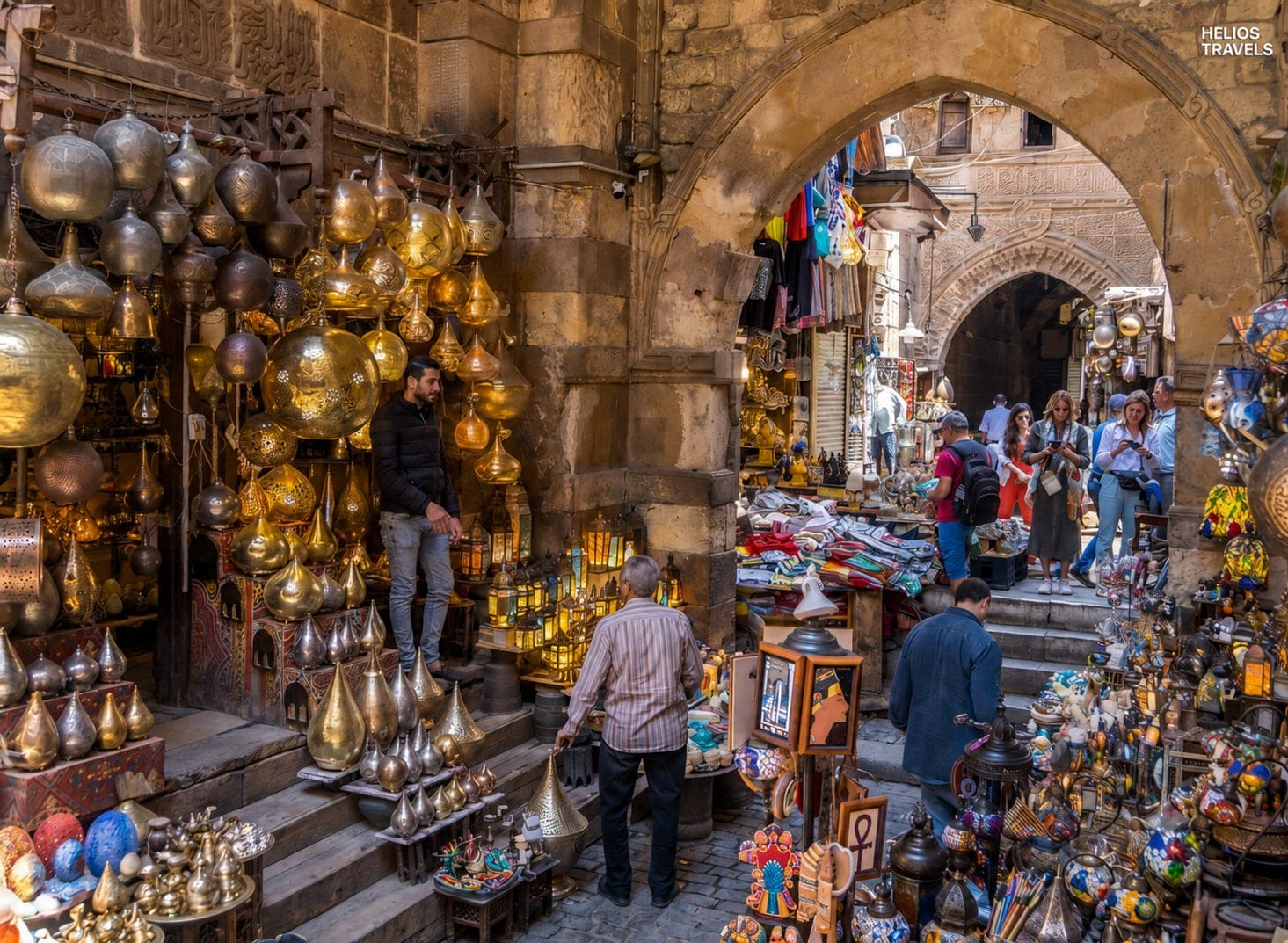
Lanterns, brassware and spice stalls in the lanes of Khan el-Khalili
The two markets, and how to find the second one
Coming in from the Hussein Mosque side, the first lanes you meet are the ones built for people who have two hours and a coach waiting. Alabaster pyramids, papyrus, camel-print cushion covers, "one dollar, one dollar", T-shirts. It is not a scam — it is a legitimate trade selling what most visitors actually buy — but it is not the market anyone means when they call this place extraordinary.
One street back, the trades are real and specialised, and they cluster the way medieval markets always did:
- The goldsmiths' quarter, the Sagha, where gold is sold by weight against the daily rate with the workmanship added on top. Cairenes buy wedding gold here. There is very little tourist trade and the atmosphere is completely different — businesslike, unhurried, nobody calling out.
- The coppersmiths, who you find by ear before you find by eye. Trays, pots and lamps being hammered on the spot, in workshops open to the lane.
- The spice and herb merchants, with hibiscus, cumin, dried mint and saffron of highly variable honesty in open sacks.
- The perfume-oil sellers, who will sit you down, and whose business is worth understanding before you buy — see below.
The instruction is simple and it is the whole point of this article: keep walking past the first lane. Turn where it looks residential and slightly less inviting. That is where the market people rave about actually is.
Book what you just read about
Tours from this article — private, with a licensed guide, and priced per person.