
Destinations · Sep 3, 2026
Pyramids and the Grand Egyptian Museum in one day
Two headline sights, two kilometres apart, and no time to waste. The order that works — and what to cut.
Helios Travels Team
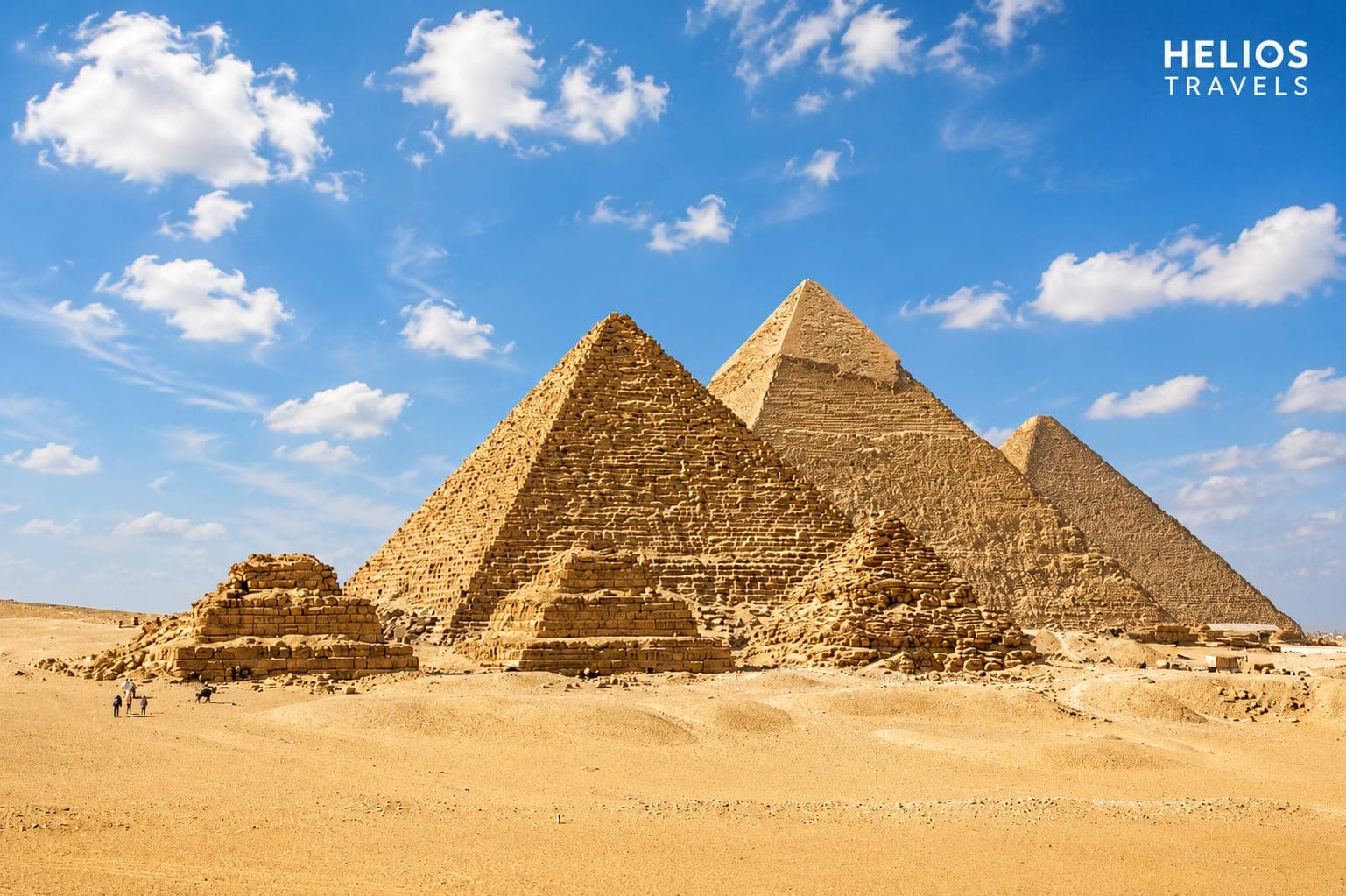
Since the Grand Egyptian Museum opened in November 2025, the classic Cairo day has a problem it never had before: there is now too much to see, and the two headline sights are two kilometres apart.
The pyramids and the GEM in one day is entirely possible. Done badly it is a forced march that leaves you exhausted and having properly looked at nothing. Here is the order that works, and the parts to cut when time runs short.
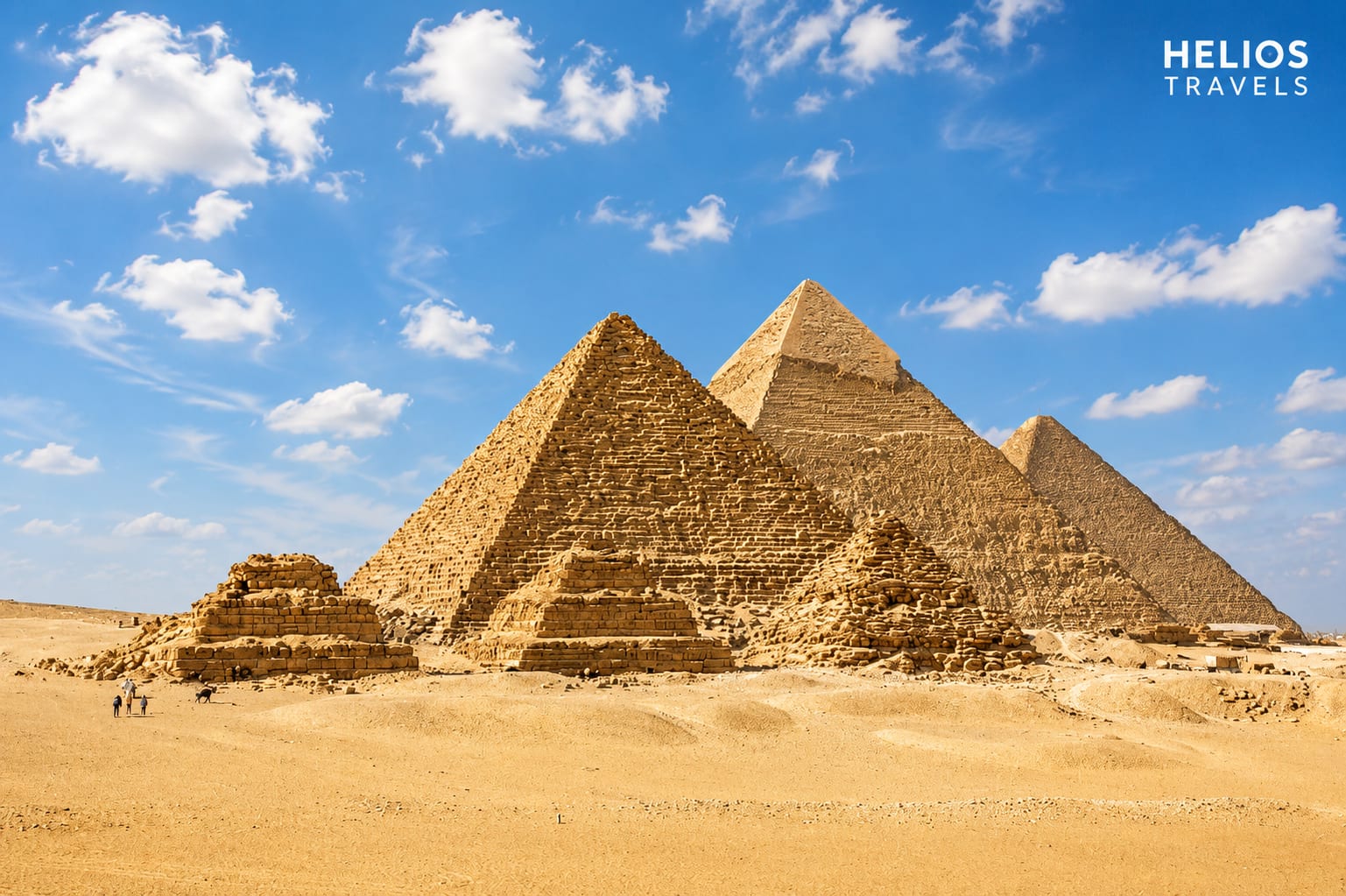
The Giza pyramids seen across the desert plateau
The single decision that shapes the day
Museum first, or pyramids first?
Pyramids first is right for almost everyone. The plateau is outdoors, unshaded and hot, and it gets hotter and busier every hour after nine. The museum is climate-controlled and just as good at two in the afternoon as at nine in the morning. Doing it the other way round means walking around the Great Pyramid at the hottest, most crowded point of the day, which is how people end up remembering Giza as a sweaty scrum.
The one exception: if you are arriving on a flight that lands mid-morning, invert it. A rushed hour at the pyramids in bad light is worse than no pyramids, and the museum absorbs a late start gracefully.
The order that works
- Giza plateau, at opening. Two hours. The panorama point, the Great Pyramid up close, and the Sphinx from the valley temple.
- Inside a pyramid if you want it — a separate ticket, and 15 to 30 minutes. Decide in advance (see below).
- Lunch, ideally somewhere with a view of the plateau rather than back in the city. Moving in Cairo traffic in the middle of the day is time you cannot get back.
- The Grand Egyptian Museum, three hours minimum. Less than that and you are walking past things rather than seeing them.
- Optional, if energy holds: Khan el-Khalili at dusk, or the Citadel for the view. Not both.
That is a ten to twelve-hour day including transfers, and it is genuinely full. If you are doing it from Hurghada, add the road or flight time on top and plan the following day as a rest day.
At the plateau: what to actually do
Giza is bigger than the photographs suggest, and most of the disappointment we hear comes from people who saw it in the wrong order.
Start at the Great Pyramid itself, not the panorama. Scale only registers when you are standing at the base with a two-metre block above your head. Khufu's pyramid was about 146 metres tall when it was finished and is roughly 139 now, having lost its casing and capstone. It held the record for tallest structure on earth for something close to four thousand years.
Then the panorama point, where all three line up. This is the postcard, and it is worth the short drive.
Then the Sphinx, approached through the valley temple. Note that it is not built from blocks but carved out of a single limestone outcrop left in the quarry — which is why it sits in a pit rather than on a platform.
One thing to know: Khafre's pyramid, the middle one, looks taller than Khufu's from most angles. It isn't. It stands on higher bedrock and still wears its polished casing at the top, which is the closest you will get to seeing what all three looked like when they were new.
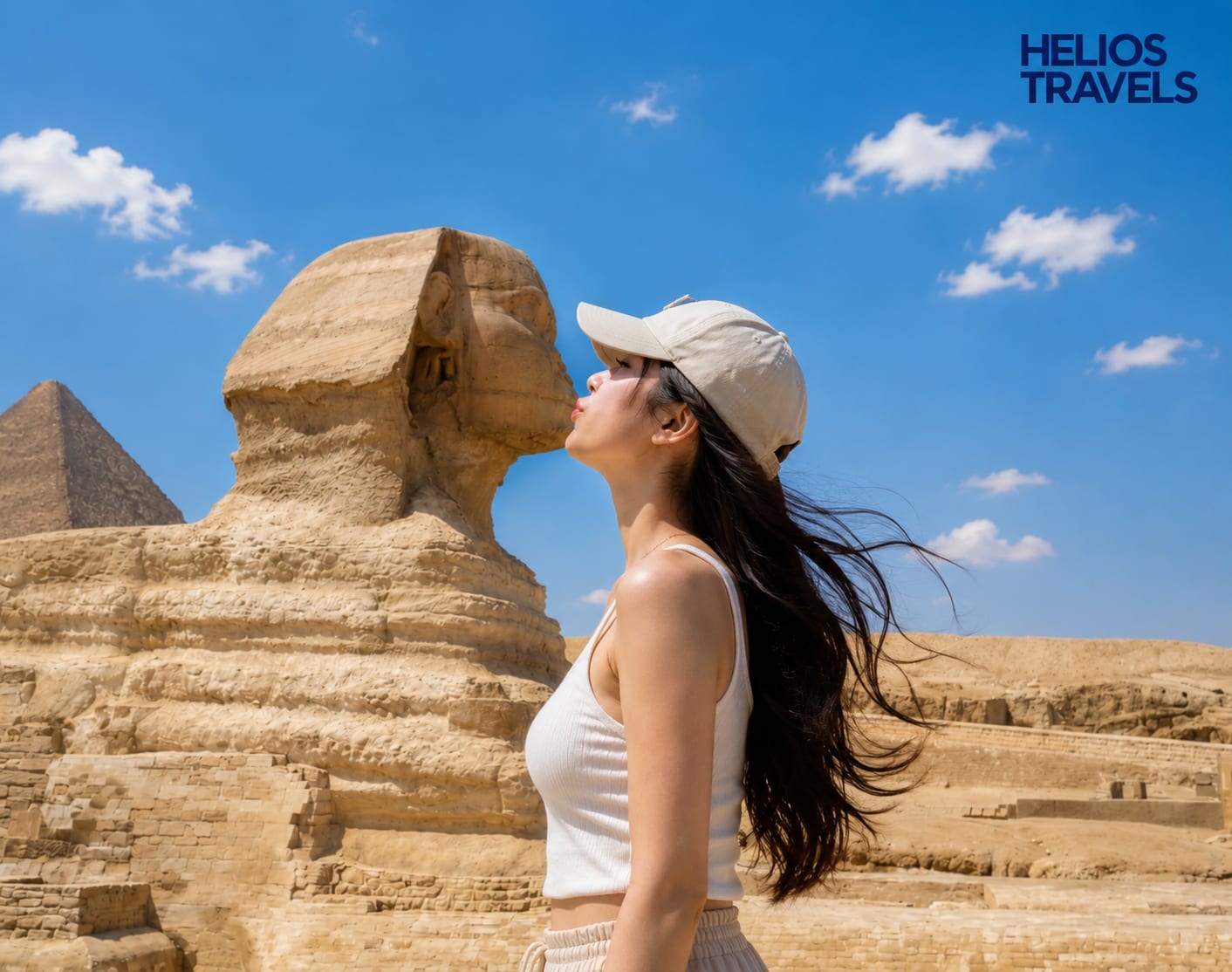
The Great Sphinx of Giza with the pyramid of Khafre behind
Going inside: which one, and should you?
Entering a pyramid costs a separate ticket and it is not for everyone. There is no decoration inside any of the Giza pyramids — no paintings, no hieroglyphs, no treasure. What there is: a very steep, low, hot climb through a cramped passage into an empty stone room.
- The Great Pyramid (Khufu) — the most expensive and the most impressive interior, because of the Grand Gallery: a corbelled ascending passage nearly nine metres high. The climb is steep and stooped in places.
- Khafre — cheaper, quieter, a simpler descending passage and a burial chamber cut into the bedrock. A good compromise.
- Menkaure — the smallest, usually the least crowded.
Skip it entirely if you are claustrophobic, have knee or back problems, or are visiting in high summer. It is genuinely hot and airless in there, and there is no shame in standing outside. Many people find the interior the least interesting part of Giza; almost nobody regrets the extra hour spent outside in the early light instead.
At the GEM: the realistic version
You cannot see the Grand Egyptian Museum in an afternoon. It is the largest museum in the world devoted to a single civilisation, and treating it as a box to tick is the fastest way to see nothing.
On a one-day Cairo trip, do this and accept the rest:
- The atrium and the colossal Ramesses II, eleven metres of him, which sets the scale for everything after.
- The Grand Staircase — royal statues climbing beside you, and at the top a window framing the pyramids you were standing at four hours ago. It is the single best piece of museum design in Egypt.
- The Tutankhamun galleries. This is the reason to come. The complete burial assemblage — over five thousand objects — is displayed together for the first time since Carter emptied the tomb. If you have already seen the Valley of the Kings, this is where the small bare room you stood in becomes comprehensible.
- Khufu's solar boat, if you have twenty minutes left: a full-size cedar vessel, buried beside the Great Pyramid and reassembled from over a thousand pieces.
Everything else is a return visit. Say that out loud at the entrance and the afternoon becomes enjoyable instead of anxious.
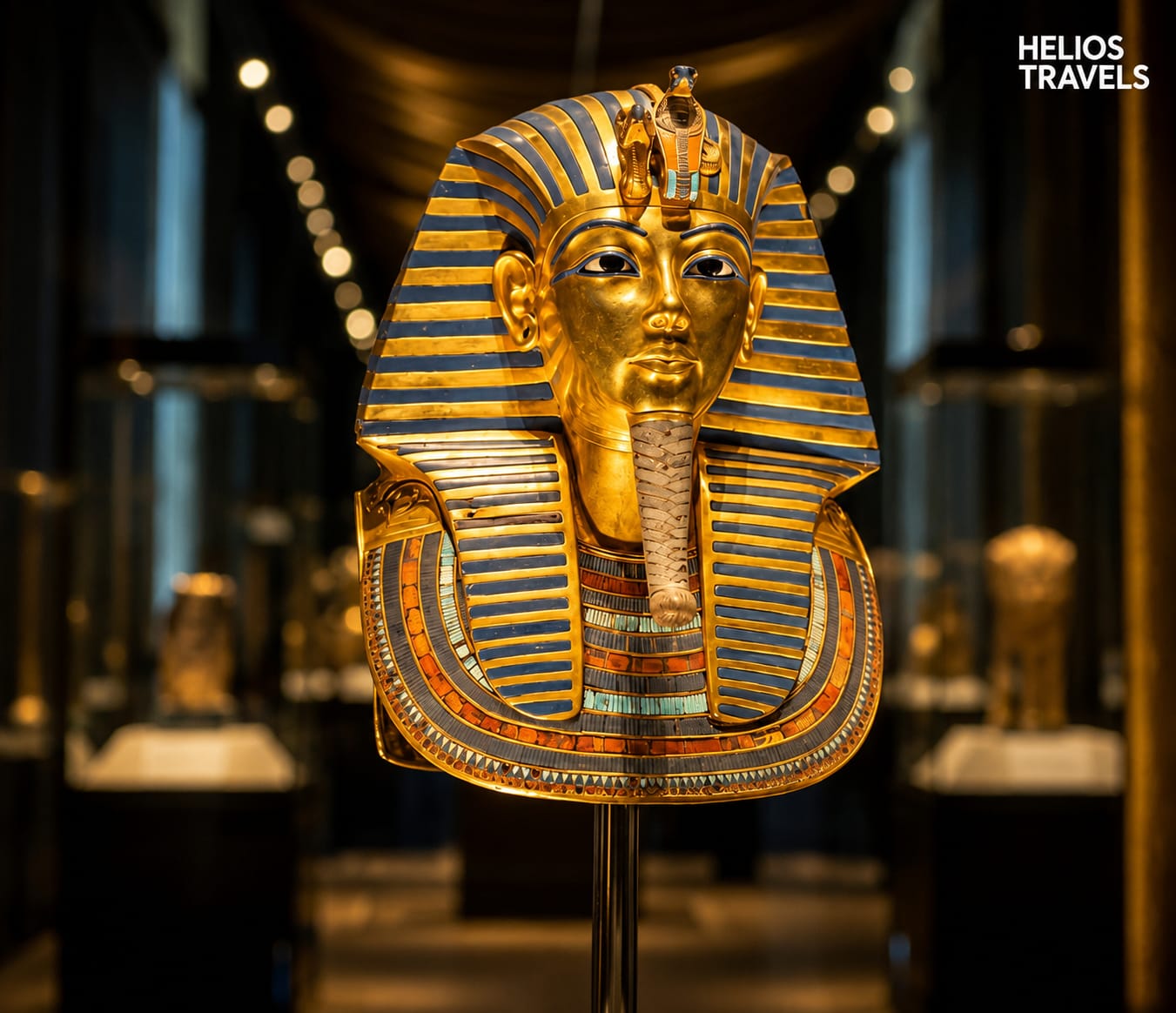
The atrium of the Grand Egyptian Museum at Giza
What this day cannot include
Be honest with yourself about the things a one-day Cairo trip does not fit, so you are not disappointed by their absence:
- Saqqara and Dahshur — the step pyramid and the two pyramids where the engineering was worked out. These need their own half-day and are the best reason to do Cairo in two days.
- Islamic Cairo — Al-Muizz Street, the Citadel, the great mosques. A separate afternoon at minimum.
- Coptic Cairo — the Hanging Church and the older, quieter city.
- The Egyptian Museum in Tahrir — still open, still full, and a completely different experience from the GEM.
If more than one of those matters to you, you want the two-day version rather than a longer single day. Cairo does not reward compression.
Practical notes
- Go early. Genuinely early. The plateau at opening and the plateau at eleven are different places in heat, light and crowding.
- Cash for the extras. Pyramid interiors and camera permissions are separate, and card machines are unreliable.
- Camel and horse touts are relentless at Giza. A firm, friendly "no thank you" repeated without stopping works. Never accept anything described as free.
- Closed shoes. The plateau is sand and rubble, and the pyramid passages are steep.
- Water and a hat — there is no shade whatsoever on the plateau.
- Traffic is the hidden cost of a Cairo day. Every crossing of the city is 45 minutes you did not budget. Group the day geographically: Giza in the morning, GEM in the afternoon, and only then decide about the centre.