Planning · Sep 5, 2026
Is Egypt safe? An honest answer from people who live here
The real risks are traffic, heat, stomach upsets and money scams — roughly in that order, and none of them is what people worry about.
Helios Travels Team
We live here, so treat what follows accordingly — but an operator with an obvious interest can still give you a useful answer, provided it is specific rather than reassuring.
So: Egypt is a safe country to travel in, and the things that actually go wrong for visitors are almost never the things they were worried about before arriving. The real risks are traffic, heat, stomach upsets and money scams, roughly in that order. Here is the honest version of each.
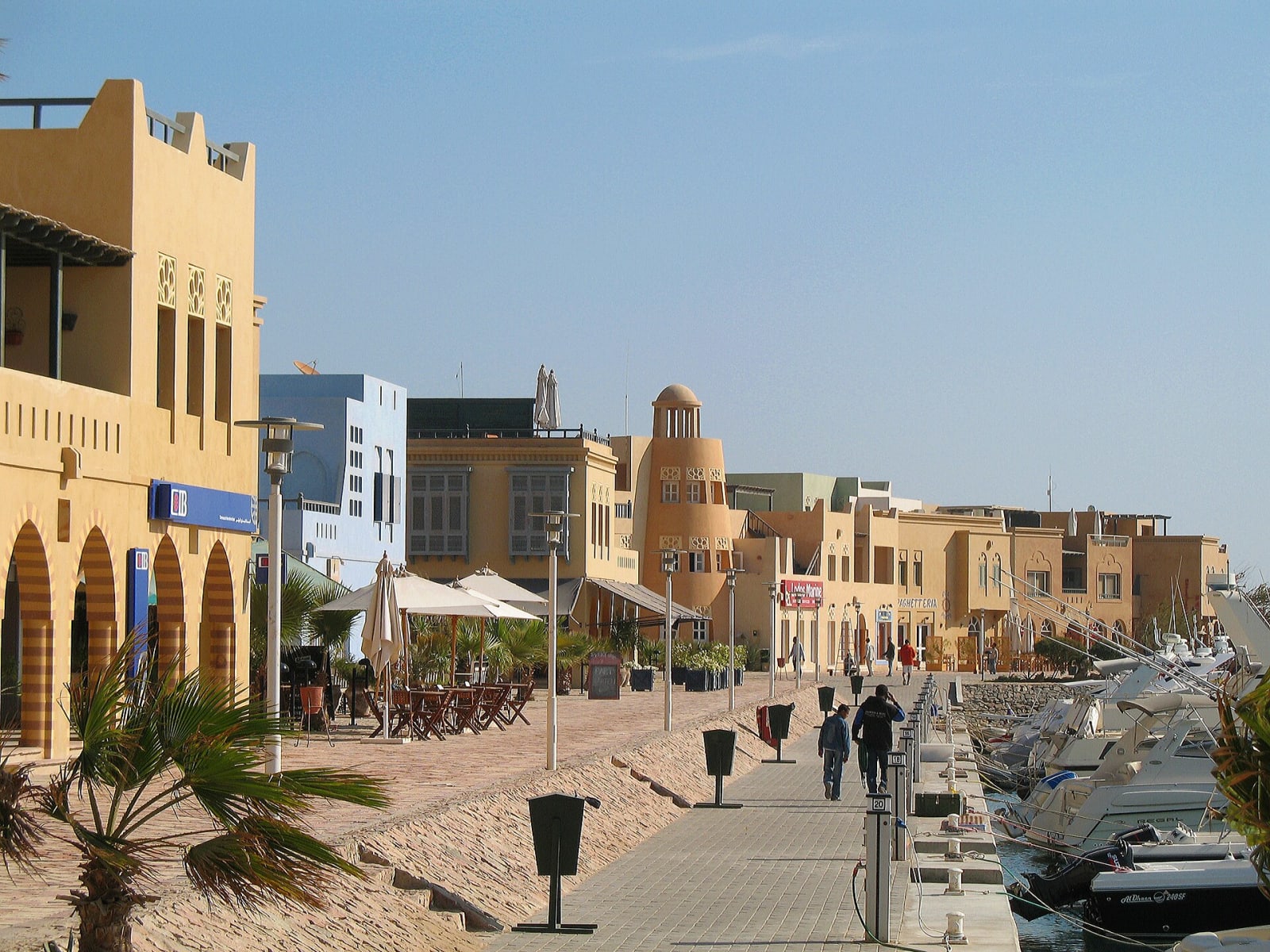
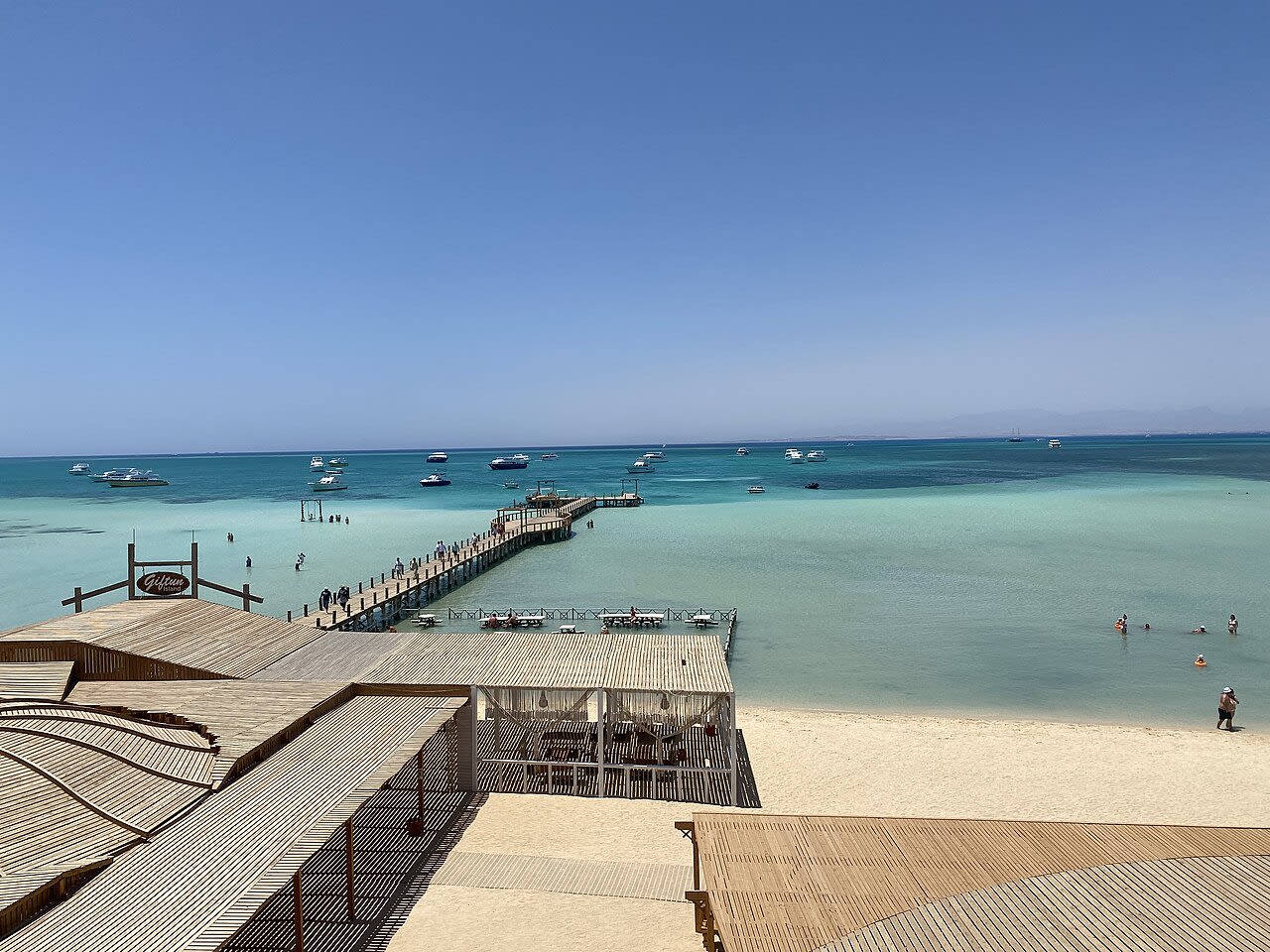
Boats and the waterfront promenade at Hurghada Marina
Start with the official answer, not ours
Before anything else: read your own government's current travel advice. The British, German, American, Canadian and Australian foreign ministries all publish country pages, they are updated as things change, and they are the only source that is authoritative for you.
What those advisories have consistently singled out is regional rather than national: North Sinai, the western desert border area with Libya, and parts of the far south near the Sudanese border. None of those is anywhere a tourist would ordinarily go. The Red Sea resorts, the Nile valley, Cairo and South Sinai are not what the warnings are about.
That distinction matters, because "Egypt" appearing in a headline about Sinai leads people to cancel a Hurghada holiday that is seven hundred kilometres away from what happened.
The risk nobody worries about, which is the biggest one
Traffic. Egyptian roads are the genuine hazard of an Egyptian holiday, and it is not close. Lane discipline is loose, speeds are high on the desert roads, and pedestrians cross where they like.
What to do about it:
- Use a seatbelt, including in the back. They exist and people skip them.
- Do not hire a car and drive yourself unless you have driven in this kind of traffic before. A driver costs very little and is the single best safety purchase of the trip.
- Cross roads with locals, not alone. It is a skill and you do not have it.
- Say something if a driver is going too fast. Politely, early, and it works. Long transfers on the Cairo and Luxor roads are where this matters.
- Quad bikes and buggies: helmet on, stay in the convoy line. Most safari injuries come from people riding wide to escape the dust.
Heat, which is the second biggest
Between June and September, Upper Egypt regularly passes 40 °C and the sun is directly overhead. People underestimate it because the air is dry and they never feel sweaty.
The failure mode is predictable: a long morning at the Valley of the Kings with one small bottle of water, then a headache, then a wasted afternoon. Drink far more than feels necessary, add salt to food, wear a hat, and treat the middle of the day as time indoors. That is not caution, it is what everyone who lives here does.
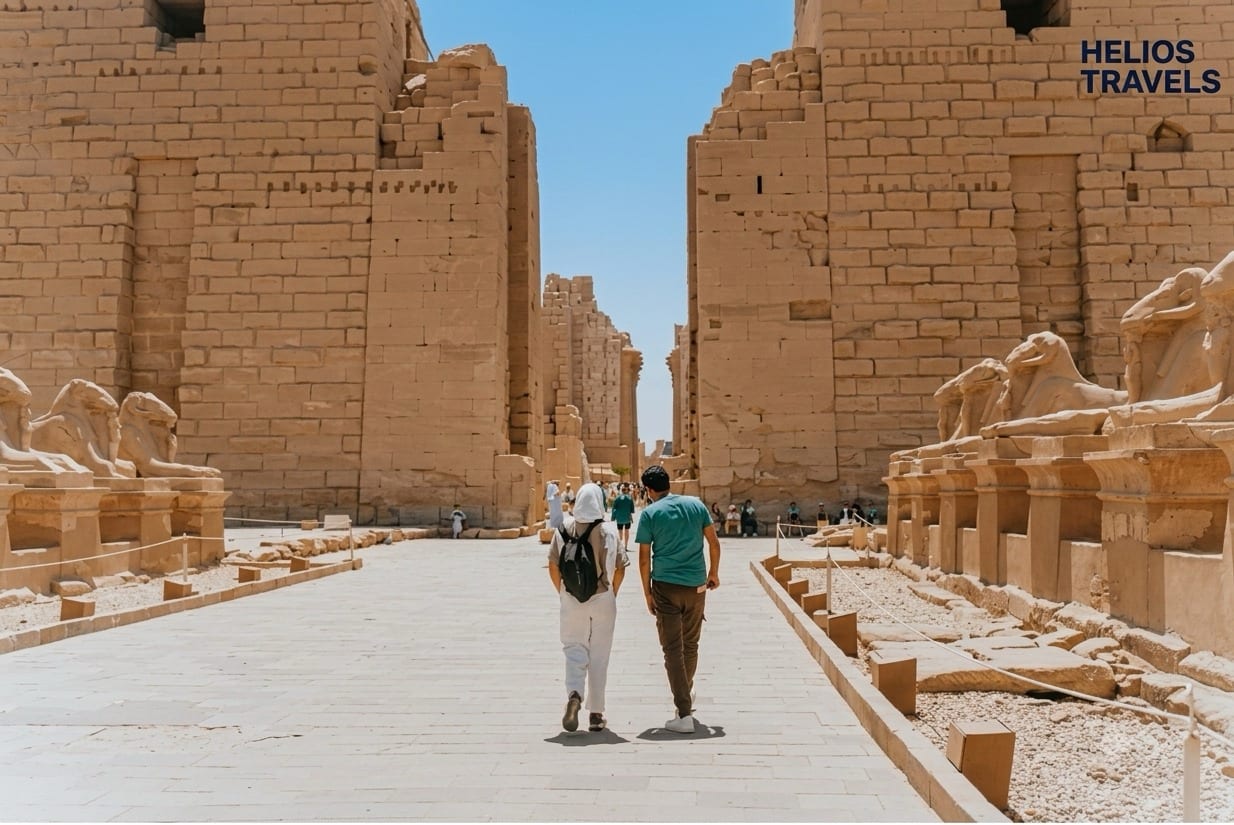
Sunlight between the columns of the Great Hypostyle Hall at Karnak
Stomach upsets
Common, rarely serious, and largely avoidable.
- Do not drink the tap water. Bottled is cheap and everywhere. Check the seal.
- Ice in resort hotels and established restaurants is made from filtered water and is generally fine. Ice from a street stall is a different question.
- Eat where it is busy. High turnover is the best food-safety signal anywhere in the world.
- Hot food served hot is safer than a buffet that has been standing. This, rather than street food, is where most trouble comes from — including in expensive hotels.
- Bring rehydration sachets. They weigh nothing and they turn a ruined two days into a quiet afternoon.
Scams and hassle — what it actually looks like
This is the thing visitors report most often, and it is important to name it accurately: it is commercial pressure, not danger. At the major sites you will be approached constantly. It is a job, in an industry that lost years of income, and it is not hostility.
The recurring ones:
- The "free" gift. A scarf, a headscarf wrapping, a small carving pressed into your hand. Nothing is free; accepting starts a negotiation. Do not take it.
- The camel or horse at Giza. The advertised price is for going out. Coming back is negotiated separately, at height, in the desert. Agree the round trip and the total in advance, or skip it.
- "The site is closed today, I'll take you to a better one." It is not closed. Walk to the official entrance.
- Papyrus and perfume "institutes" appearing in a tour itinerary. These are commission stops. A private tour lets you decline them.
- Taxis without a meter. Agree the fare before getting in, or use a ride app in Cairo, where they work well.
- Guardians at tombs offering to open something. Do not pay for access to a closed area. Buy the ticket for the tomb you want.
A firm, friendly, repeated "no thank you" while continuing to walk works. Stopping to explain does not.
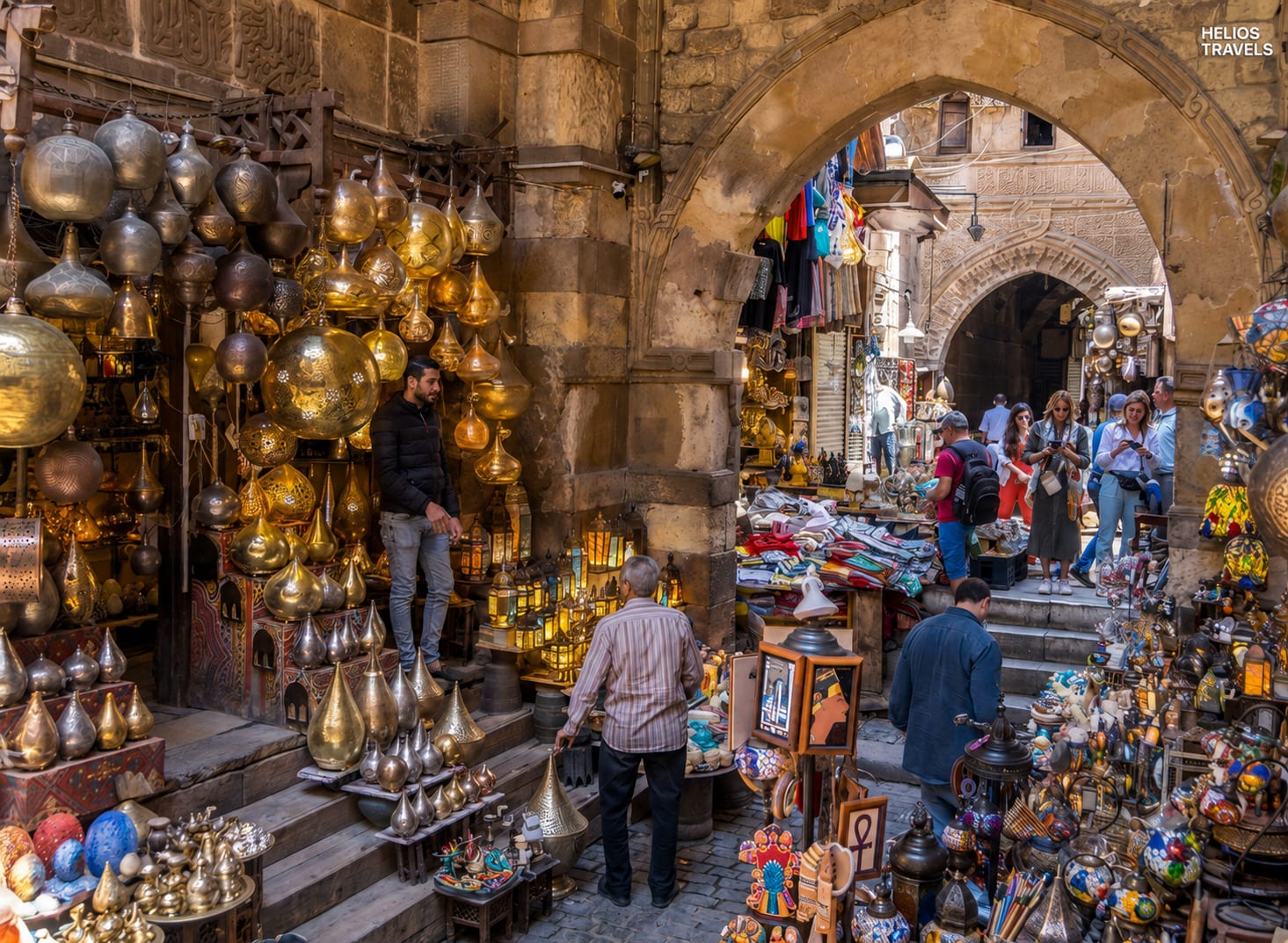
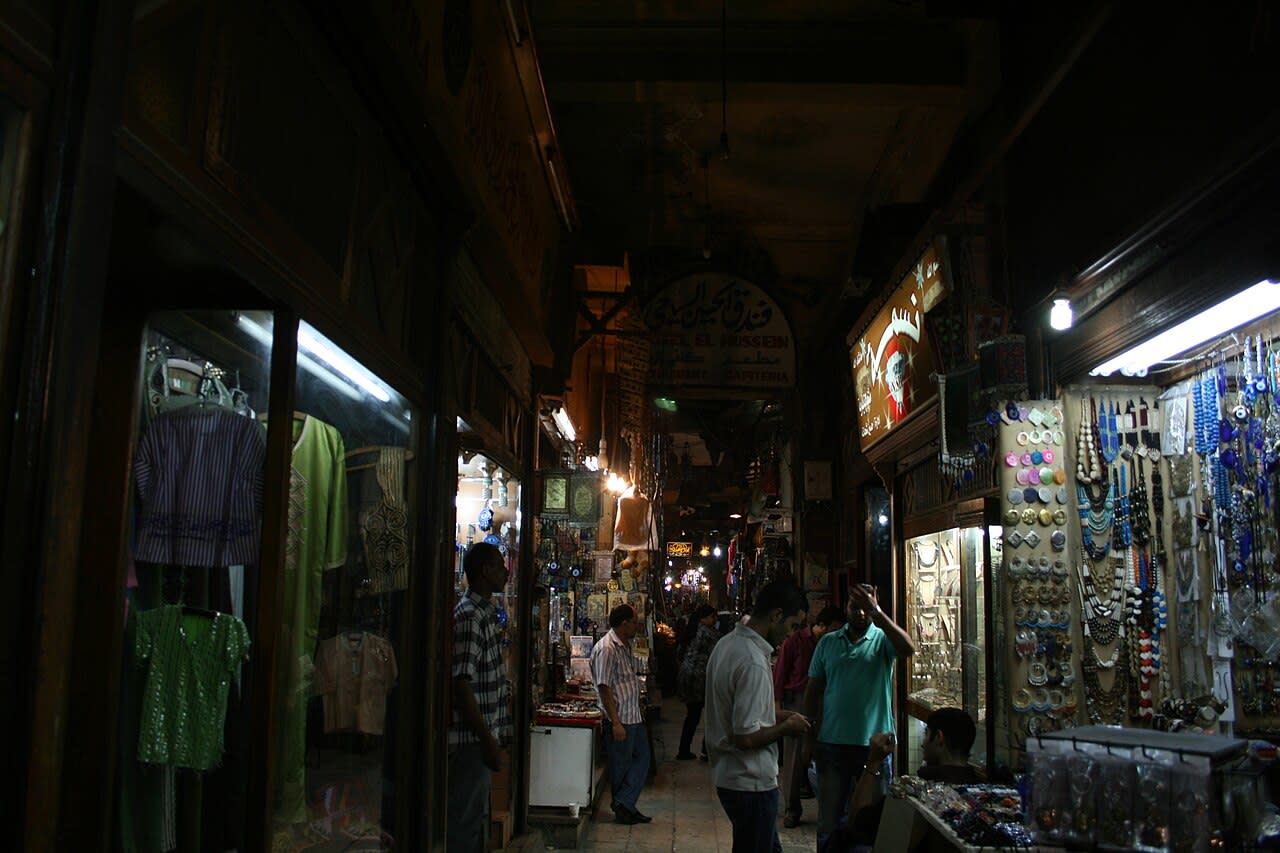
The covered lanes of Khan el-Khalili bazaar in Cairo
Women travelling in Egypt
Worth being direct about. Staring and catcalling are common, more so in Cairo and provincial towns than in the Red Sea resorts, and they are wearing rather than threatening. Serious incidents involving tourists are rare.
What our female guests say helps: dressing to cover shoulders and knees away from the beach — not a religious requirement for visitors, simply a way of attracting less attention; sunglasses; not responding to comments at all rather than politely; and using hotel or app taxis at night rather than flagging one down. Solo female travellers do come here and enjoy it, and the resorts in particular are relaxed. But we would not tell anyone the harassment does not happen, because it does.
Where the resorts differ from the cities
Hurghada, El Gouna, Makadi and the Sharm resorts are, in practice, very low-friction. Compounds are gated, tourist police are visible, and the hassle is a fraction of what you get at Giza. Many visitors spend a fortnight here and are approached less in the whole trip than in one afternoon at the pyramids.
Cairo is a large capital and behaves like one: pickpocketing in crowds, aggressive touting at monuments, and traffic that demands attention. Nothing exotic — the same care you would take in any big city.
Sensible precautions, briefly
- Travel insurance that covers what you will actually do, including diving and quad biking, which many policies exclude by default.
- A photo of your passport on your phone, and the original in the hotel safe.
- Licensed operators for excursions, especially boats and desert trips. Ask about life jackets and check the boat has them.
- Do not photograph military or police installations, checkpoints, or bridges. This is taken seriously and is the one rule visitors break by accident.
- Respect Ramadan daylight hours if you travel then — not a safety issue, a courtesy one.
- Keep some cash separate from your wallet.
The honest summary
Egypt is safe for tourists in the way that most of the world is safe for tourists: the country is not trying to hurt you, and the risks are mundane. Wear a seatbelt, drink more water than you want to, do not take the free gift, and check your own government's advice before you book rather than a headline.
The parts of the country that carry real warnings are places no holiday goes. If the trip you are considering is the Red Sea, the Nile valley, Cairo or South Sinai, the safety question is not the one that should decide it.
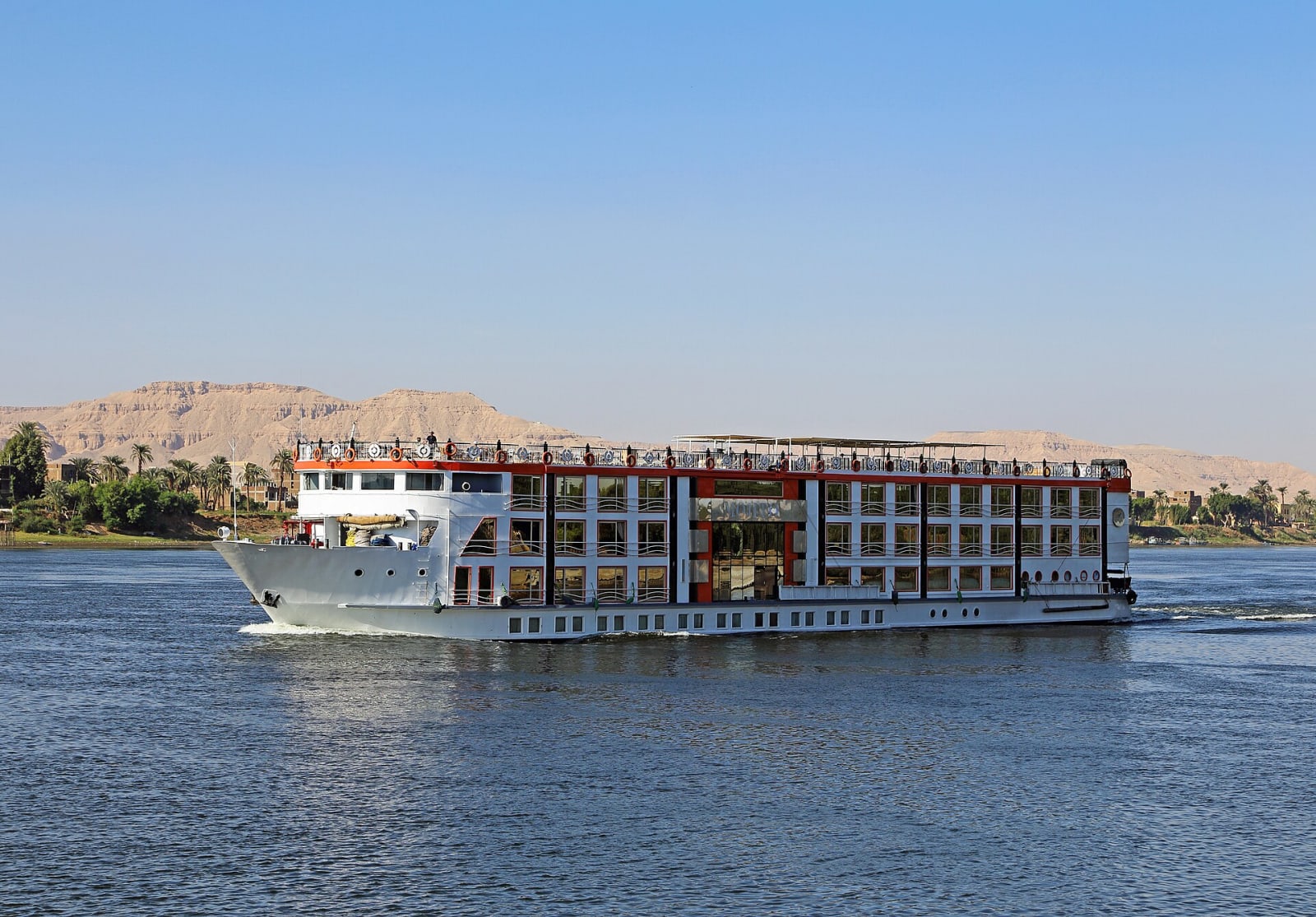
A Nile cruise boat moored on the river between Luxor and Aswan
Book what you just read about
Tours from this article — private, with a licensed guide, and priced per person.