Planning · Sep 9, 2026
Cash, cards and ATMs in Egypt
Your hotel takes cards. The boat captain, the tomb supplement and the taxi do not.
Egypt runs on cash to a degree that surprises people arriving from countries where a phone settles everything. Your hotel takes cards. The boat captain, the tomb supplement, the taxi, the man who carries your bag and the café in the old town do not. Here is how the money side actually works, without figures that will be out of date by the time you read this.
The currency, and the two-tier reality
The currency is the Egyptian pound (EGP, written LE or ج.م). Notes come in a wide range of denominations, and there are now polymer versions of some alongside the old paper ones — both are valid and circulate together.
In practice you will move between two economies in the same day:
- The pound economy. Taxis, cafés, markets, tips, site ticket supplements, anything local. Cash, and small notes matter more than the total.
- The hard-currency economy. Excursions, dive centres, hotel extras and many tour operators quote in euros or dollars. This is normal and not a trick — a lot of tourism costs are themselves priced in foreign currency.
You can usually pay excursion operators in euros, dollars or pounds. What you should not do is pay in a foreign currency and take change in pounds: the conversion is done at whatever rate the person in front of you decides, and you will lose on it. Pay in the currency you were quoted, or ask for the pound price up front and pay that.
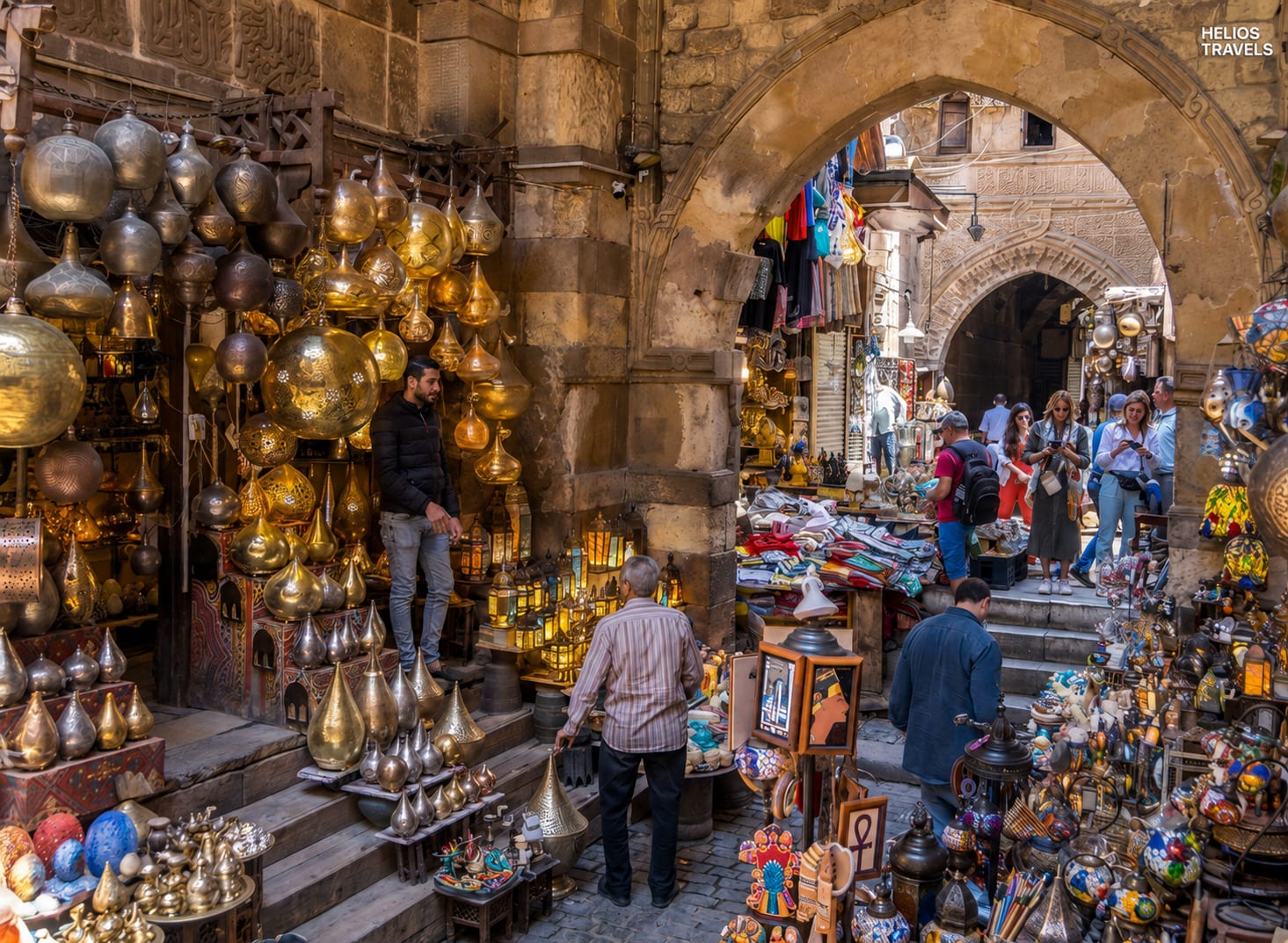
Market stalls in Cairo, where cash is the only practical method
Getting cash: the honest ranking
1. ATMs, at a bank. This is the best option for almost everyone. Machines are widespread in Hurghada, Luxor, Aswan and Cairo, and they dispense pounds at the interbank rate your own bank applies. Use one physically attached to a bank branch rather than a standalone machine in a hotel lobby or shopping arcade — bank machines are refilled more reliably, are less likely to be tampered with, and there is somebody to speak to if the machine keeps your card.
2. Official exchange offices and bank counters. Fine, straightforward, bring your passport. Rates are competitive and there is no drama.
3. Your hotel's exchange desk. Convenient, always available, and the rate reflects that. Useful for a small amount on arrival at 2 am; not where you change your holiday money.
4. Anyone who approaches you in the street offering a better rate. No. This is illegal, and the ways it goes wrong — short count, folded notes, withdrawn currency, a very fast handover — are not worth the few percent on offer.
Book what you just read about
Tours from this article — private, with a licensed guide, and priced per person.