Planning · Sep 5, 2026
The Egyptian visa, explained once and clearly
Three ways in, one free permit that catches people out, and the airport order of operations nobody tells you.
Helios Travels Team

The Egyptian visa is simpler than the internet makes it look, and the confusion comes from one thing: there are three different ways in, and travel forums mix them up constantly.
Here they are, separated, with the one detail that catches people out at the end.

The pyramids of Giza on the edge of Cairo
The three routes in
1. Visa on arrival. Available to many nationalities, including most European, North American and Australasian passports. You buy it at a bank window in the arrivals hall before passport control, in cash, and the officer sticks it in your passport at the desk. It takes a couple of minutes and it is the route most visitors use.
2. e-Visa in advance. Applied for online through Egypt's official portal, visa2egypt.gov.eg, and approved by email before you fly. It costs a little more than the sticker and it removes the queue. Apply at least a week ahead; it is not instant.
3. Visa from an embassy. Required for some nationalities, and the only route if yours is one of them. This is the case that trips people up, because a friend's experience with a different passport tells you nothing.
There is also a small group of nationalities exempt from a visa altogether. Which group you are in depends entirely on your passport, so check the official portal rather than a forum post — including whether you need pre-approval, which some nationalities do even for the on-arrival route.
The Sinai-only permit, and why it catches people
If you fly into Sharm el-Sheikh and stay within South Sinai — Sharm, Dahab, Nuweiba, Taba, St Catherine — you can be given a free entry permit instead of a visa, valid for a short stay.
It is genuinely useful for a pure beach-and-diving week. It is also the single most common visa mistake we see, because of what it does not cover: the rest of Egypt.
On a Sinai permit you cannot go to Cairo, you cannot go to Luxor, and you cannot take a mainland excursion. People discover this the morning they try to board a pyramids trip. If there is any chance you will want to see anything beyond the Sinai resorts, take the full tourist visa — the difference in cost is trivial against a cancelled day at the pyramids.
None of this applies to Hurghada. Hurghada is on the mainland, so arrivals there take the ordinary visa and everything in the country is open to them.
What to have ready
- A passport valid at least six months beyond your arrival date. This is enforced, and airlines check it at departure — being turned away at your home airport is the worst version of this mistake.
- Cash for the visa fee, if you are buying on arrival. Major currencies are accepted at the bank windows; a card is not a safe assumption.
- Small notes. Change at the arrivals bank is not guaranteed.
- Your hotel address, for the landing card.
- A pen. Sounds trivial; the queue for a shared one is not.
- A visa for each traveller, including children. A child on a parent's passport still needs their own where the passport is separate. Do not assume.
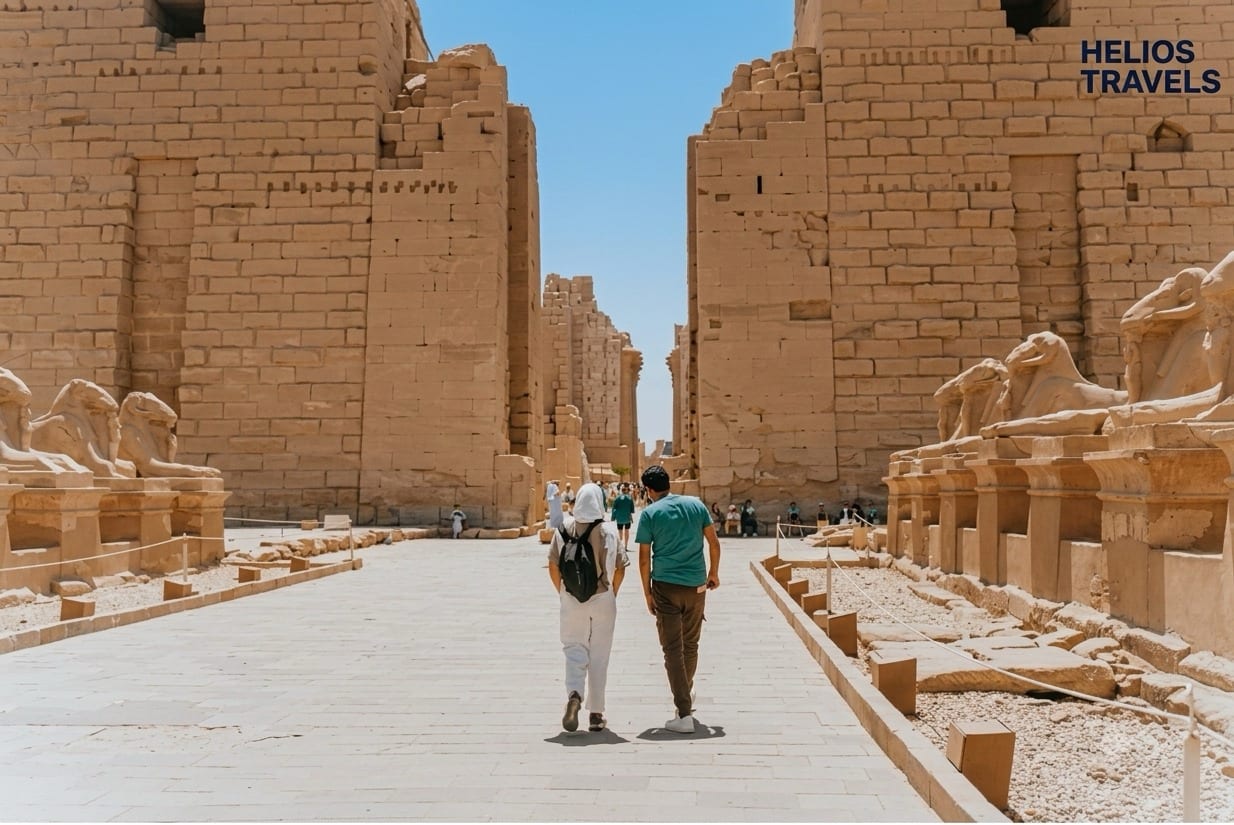
The Great Hypostyle Hall at Karnak Temple, Luxor
The order of operations at the airport
This is the bit nobody explains, and getting it wrong means queueing twice.
- Off the plane, follow arrivals.
- Before the passport desks, look for the bank counters along the wall. Buy the visa sticker there.
- Stick it in your passport yourself, on a blank visa page.
- Fill in the landing card if one was handed out.
- Then join the passport control queue.
People routinely walk past the bank counters, queue for immigration, and get sent back. If you already have an e-visa you skip straight to step 5, which is the real benefit of applying ahead.
Length of stay, extensions and multiple entry
The standard tourist visa covers a stay of up to thirty days. That is comfortably more than a resort holiday and enough for almost any itinerary, including a round trip with a Nile cruise.
Multiple entry visas exist and cost more. You want one only if you are leaving and re-entering — a trip to Jordan by ferry from Sharm, for example, or crossing to Sudan. A day trip within Egypt does not use up your entry.
Extensions are handled at the passport office, and they are a bureaucratic afternoon rather than a formality. If you already know you want longer than thirty days, sort it before you travel rather than after you arrive.
Overstaying carries a fine, payable on departure. It is not catastrophic for a day or two, but it is a genuinely unpleasant way to end a holiday, and the airport is not where you want to be negotiating it.
Things that are not true
- "You need a printed itinerary and hotel bookings." Not for the on-arrival route in practice. Have your hotel address; nobody has asked our guests for a folder of paperwork.
- "The visa covers your whole trip including Sinai." It does, in that direction. The reverse is not true — a Sinai permit does not cover mainland Egypt. The confusion runs one way.
- "You can pay by card." Sometimes. Do not plan on it.
- "Children do not need one." They do, where they hold their own passport.
- "You can extend indefinitely." You cannot, and the fine grows.

Luxor Temple illuminated after dark
Passport control, and what happens after
The desk itself is quick. You hand over the passport with the sticker in it, the officer photographs you, stamps an entry date, and you go. Nobody has interviewed our guests about their plans.
Two things worth knowing about what follows:
Your entry stamp is the date that matters, not the visa purchase date. Thirty days runs from the stamp. If you are close to the limit on departure, that stamp is what the officer will be counting from, so photograph it — it is easier than finding the right page at four in the morning at the airport.
Hotels take your passport briefly at check-in to register you. This is normal and legally required of them; they copy the details and hand it back, usually within minutes. If a hotel wants to keep it overnight, ask for it back — a copy is sufficient and reputable hotels will not argue.
Keep the passport in the room safe rather than carrying it around. What you need day to day is a photograph of it on your phone, plus the physical passport only for domestic flights and, occasionally, at a checkpoint on a long desert transfer.
The short answer
Check visa2egypt.gov.eg for your own nationality — not a forum, not a friend with a different passport. Most visitors either buy a sticker at the bank window before immigration, or apply for the e-visa a week ahead and walk straight through.
Make sure your passport has six months left on it. Bring cash. And if you are flying into Sharm el-Sheikh with any intention of seeing Cairo or Luxor, take the full visa rather than the free Sinai permit — that one decision is the difference between a pyramids day and a morning spent arguing at a desk.
Book what you just read about
Tours from this article — private, with a licensed guide, and priced per person.