
Planning · Sep 3, 2026
Egypt for the first time: a plan that actually holds up
Four decisions, in order. Get them right and the trip works; get them wrong and you spend half of it on a bus.
Helios Travels Team

Most first Egypt itineraries fail in the same way: too many places, too little time, and no rest. People try to fit Cairo, Luxor, Aswan, Abu Simbel and the Red Sea into ten days, spend half of it in transit, and come home saying it was amazing and they need a holiday.
This is the version that holds up. Four decisions, in order, and each one narrows the next.

The Giza pyramids at the edge of the city
Decision 1: how many days do you actually have?
Be honest, and count only full days on the ground. A flight that lands at 3 pm does not give you that day.
- Under 5 days. Pick one thing. Cairo and Giza, or Luxor. Not both. A five-day trip that tries to do the whole country is four days of buses.
- 7 days. The first honest full trip. Either Cairo plus Luxor properly, or a beach base with two or three big day trips.
- 10 to 12 days. The sweet spot. Cairo, a Nile cruise between Luxor and Aswan, Abu Simbel, and a few days on the Red Sea to recover. This is the shape most people should book.
- 14 days or more. Adds Alexandria, the Western Desert oases, or genuine slowness — which is a real luxury in Egypt.
Decision 2: which shape of trip
There are three, and mixing them is what produces the exhausting itinerary.
The round trip. You move: Cairo, then south, then back. Maximum sightseeing, minimum rest, one hotel after another. Right for people whose priority is seeing the monuments and who are happy to be tired.
The beach base. You stay in Hurghada or Marsa Alam and take day trips out. Maximum comfort, one unpacking, snorkelling in between. The cost is transit: Luxor is a four-hour drive each way, Cairo further. Right for families, first-timers, and anyone travelling with people of mixed stamina.
The cruise-centred trip. A Nile cruise between Luxor and Aswan does something neither of the others can — your hotel moves while you sleep, so you wake up at the next temple with no packing and no bus. Three or four nights afloat is the least tiring way to see the most.
Most good ten-day trips are a cruise with Cairo bolted onto one end and the Red Sea onto the other.
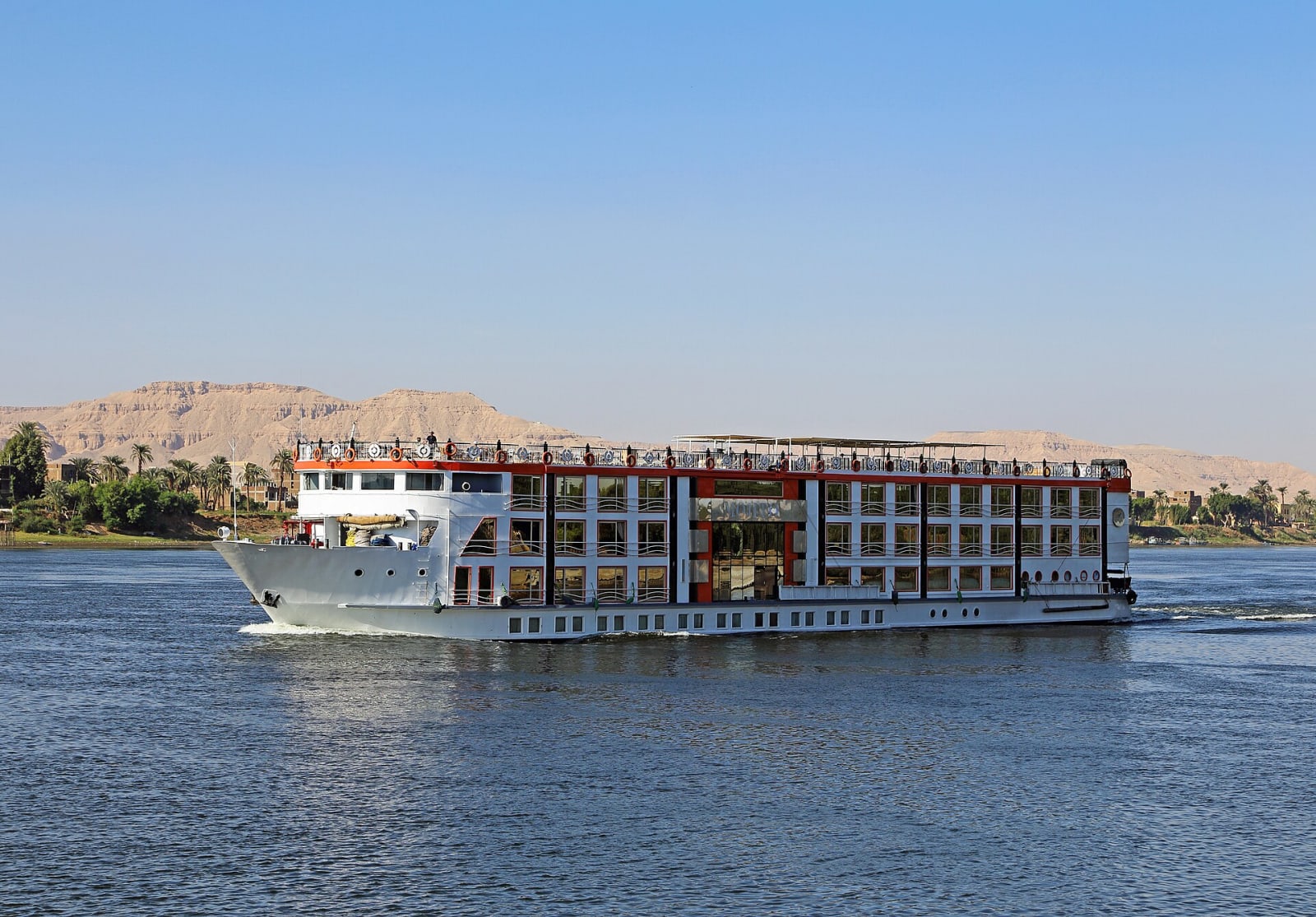
A Nile cruise boat moored on the river between Luxor and Aswan
Decision 3: when
Egypt's season is real and it is not a marketing invention.
- October to April is the comfortable window, and December and January are the peak — busiest sites, highest prices, best weather.
- May and September are the value months: hot but manageable, and noticeably quieter.
- June to August is genuinely severe in the south. Luxor and Aswan regularly pass 40 °C and can reach the mid-forties. The Red Sea coast is more bearable because of the sea breeze, so a summer beach holiday with early-morning excursions works — a summer round trip does not.
Two dates worth knowing: 22 February and 22 October, when the rising sun reaches into the sanctuary at Abu Simbel and lights the statues. And Ramadan, which moves about eleven days earlier each year — look up the dates for your year. Travelling during Ramadan is entirely possible and often lovely, but daytime rhythms change and some restaurants close until sunset.
Decision 4: private, group, or independent
Independent is cheapest and hardest. Egypt is navigable on your own, but the friction is constant — negotiating every taxi, queueing for every ticket, and being the only person responsible when a driver does not turn up at 4 am.
Group tours are the cheapest guided option. The cost is pace: on a fourteen-hour day, waiting for the slowest of forty people at every stop is an hour of Karnak you do not get.
Private costs more per person and gives you the one thing that actually changes an Egyptian holiday — the ability to leave when a site fills up, to skip a stop, to eat when you are hungry, and to start at six rather than eight. For two or more people travelling together, the gap in price is usually smaller than expected and the gap in experience is not.
A ten-day plan that works
- Days 1–3, Cairo. Giza and the Grand Egyptian Museum on one day; Saqqara and Dahshur on another; Islamic or Coptic Cairo on the third.
- Day 4, fly to Luxor. East bank in the afternoon: Karnak, and Luxor Temple after dark.
- Days 5–7, Nile cruise to Aswan. West bank at dawn on the first morning, then Edfu and Kom Ombo from the boat.
- Day 8, Abu Simbel and Philae, then fly north.
- Days 9–10, the Red Sea. One snorkelling day, one doing nothing at all.
Note what that plan contains that most do not: a day at the end with nothing in it. That day is not wasted. It is what makes the other nine survivable.
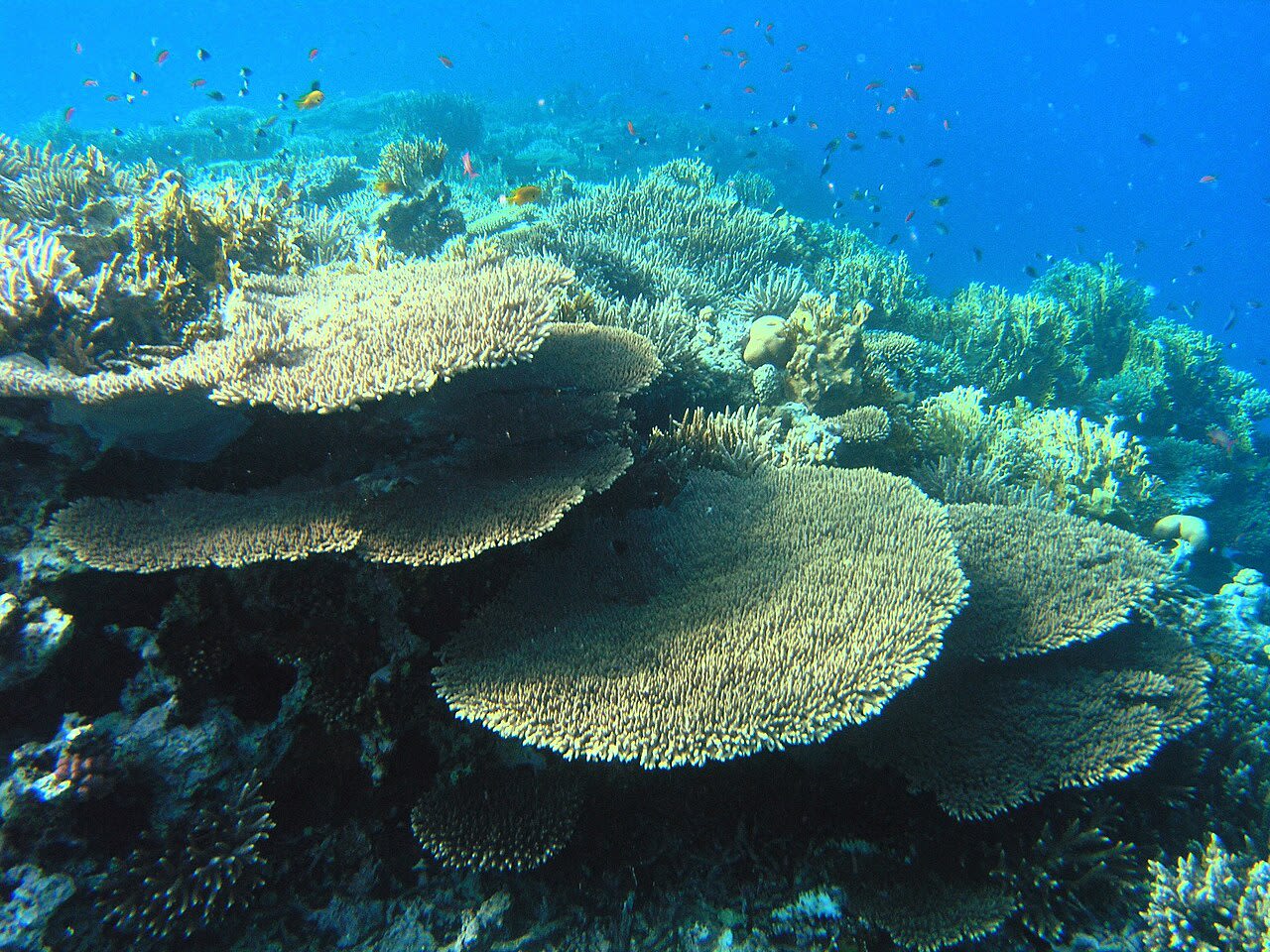
Reef and clear shallow water on the Red Sea coast
What to book before you arrive
- Internal flights. Cairo–Luxor and Aswan–Cairo fill up and are much cheaper booked early.
- Nile cruises, especially over Christmas and New Year.
- Abu Simbel, which needs its own logistics whichever way you go.
- Balloons at Luxor in high season.
Everything else — day trips, snorkelling, desert safaris — can be arranged once you are there, and often better, because you will know by then how much energy you actually have.
Where the money actually goes
Egypt is not an expensive country, but the shape of the spending surprises people. Roughly, in descending order:
- Flights and internal transport. Usually the largest single line, and the one most affected by booking early. Domestic flights between Cairo, Luxor, Aswan and Hurghada are the difference between a relaxed trip and a bus-heavy one.
- Accommodation, which spans an enormous range. All-inclusive resorts on the Red Sea are exceptional value; boutique hotels in Luxor and Aswan are not, but they are worth it.
- Excursions and guiding. The gap between a group day and a private day is real, and it buys pace rather than luxury.
- Entrance tickets, which add up faster than expected. The Valley of the Kings alone can involve three or four separate purchases, and every major site charges separately for cameras.
- Food and drink, which is cheap unless you eat exclusively in hotels.
- Tips, which are constant, small, and genuinely add up over two weeks.
The mistake is budgeting carefully for the flights and hotel and then being caught out by the daily drip — tickets, camera permits, park fees, tips. Set aside a daily cash allowance for that and it stops being irritating.
Arrival, and the first 24 hours
Most visitors get a visa on arrival — bought at a bank window in the arrivals hall before passport control, in cash, before you queue for immigration. Some nationalities need one in advance and some are exempt, so check your own passport rather than a friend's experience. An e-visa is also available and removes the queue.
Then three things that make the first day easier:
- Get cash at the airport, and ask for smaller denominations. A wallet full of large notes is useless for tipping and taxis.
- Buy a SIM at the airport if you want data. It is cheap, takes ten minutes, and needs your passport.
- Arrange your first transfer in advance. Arriving at Cairo airport at midnight and negotiating with taxi drivers is the worst possible introduction to a country you will otherwise like enormously.
And do not schedule anything ambitious for day one. Egyptian sightseeing days start early; arriving late and getting up at five the next morning is how people spend the first three days of a holiday exhausted.
Five things nobody tells first-timers
- The distances are bigger than the map suggests. Hurghada to Luxor is about 290 km and four hours each way. Egypt is a big country with its population squeezed onto a thin green strip.
- Tipping is constant and small. Baksheesh is part of the economy, not a scam. Carry a thick stack of small notes and the whole country becomes easier.
- Cash still rules. Cards work in hotels and big restaurants and almost nowhere else.
- You will be approached constantly at major sites. It is a job, not hostility. Keep walking, say no clearly, and never accept anything described as a gift.
- Two sites a day is a full day. Three is a hard day. Four is a bad day you will not remember.
Plan fewer things than you want to. The trip you will talk about afterwards is the one where you sat in the shade at Karnak for twenty minutes and watched the light move down a column — not the one where you saw one more temple.