Planning · Sep 3, 2026
The 2027 total solar eclipse over Luxor: six minutes of darkness above the Valley of the Kings
2 August 2027 — the longest totality on easily reached land this century, directly over ancient Thebes.
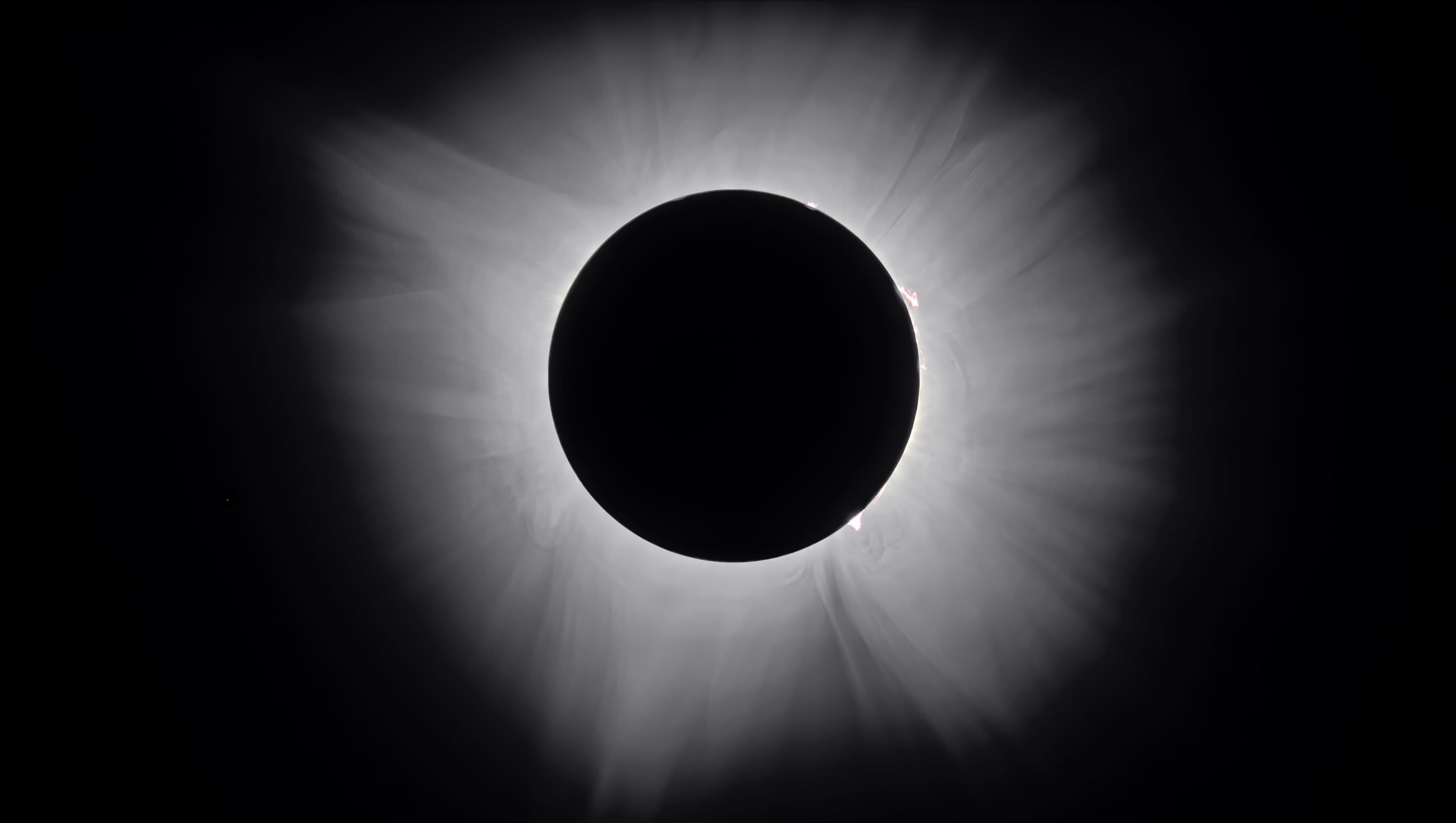
On Monday 2 August 2027, the Moon's shadow crosses Egypt and the sun goes out over Luxor for six minutes and twenty-two seconds.
That number is the whole story. Most total eclipses give you two or three minutes. This one is the longest totality anywhere on easily reached land this century, and the longest anywhere on Earth until 2114. It happens directly above the greatest concentration of ancient monuments in the world.
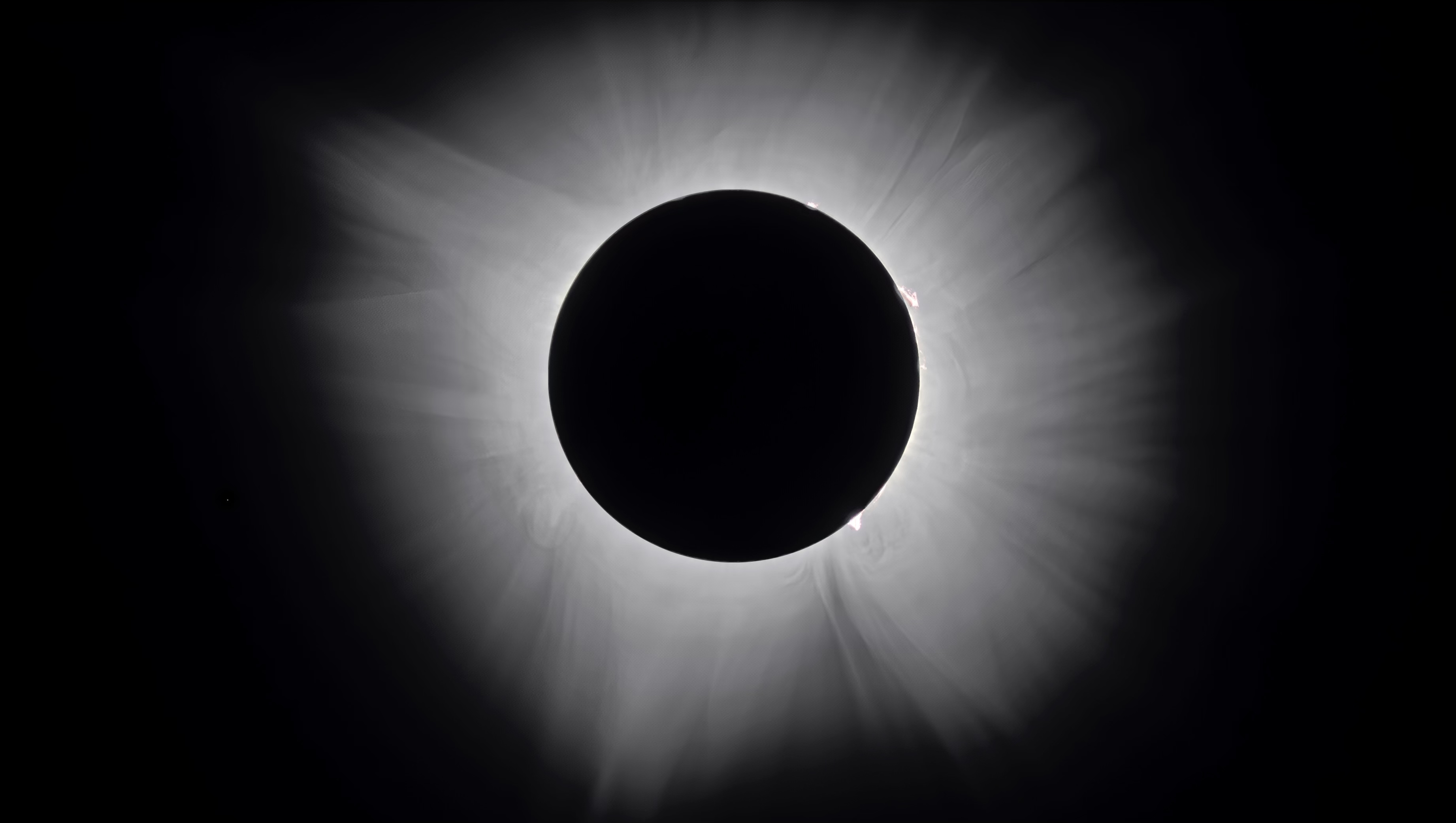
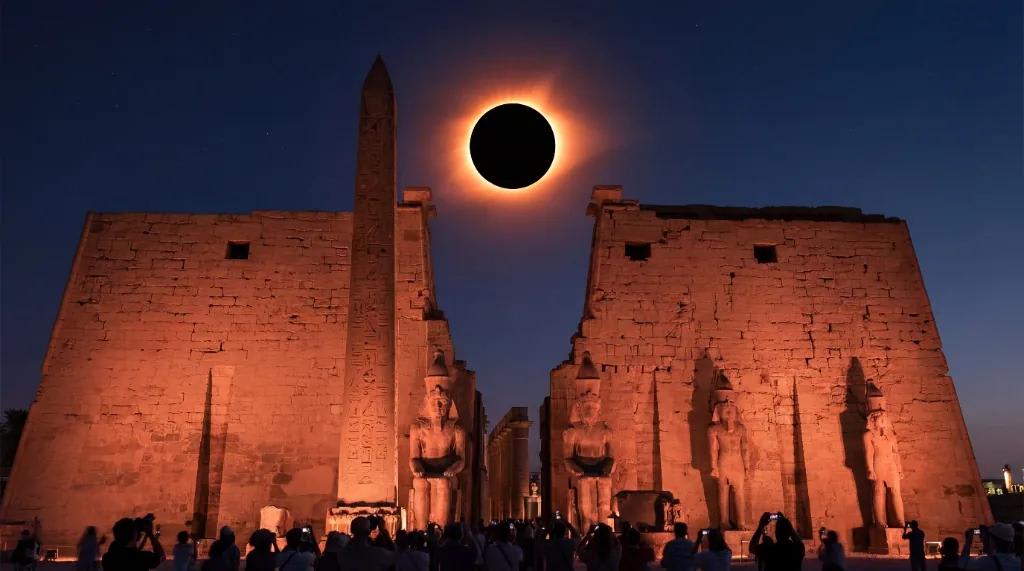
The corona during the total eclipse of 8 April 2024. Photo: Brucewaters, CC BY 4.0, via Wikimedia Commons
The essentials
| Date | Monday 2 August 2027 |
|---|---|
| Type | Total solar eclipse |
| Totality at Luxor | 6 minutes 22 seconds |
| Maximum eclipse | 13:05 local time — roughly 13:02 to 13:09 |
| Width of the shadow | 258 km |
| Sun's position | High overhead, close to midday |
| Cloud risk in August | Very low — historically around 1–20% |
Confirm exact local timings closer to the date; the partial phases begin over an hour before totality and end over an hour after.
Why Luxor, of all places
Eclipse chasers pick their spot on two things: how long totality lasts, and how likely it is that a cloud ruins it. Luxor wins on both at once, which almost never happens.
The point of greatest duration sits about sixty kilometres south-east of the city, so Luxor itself gets within a couple of seconds of the maximum. And Upper Egypt in August is one of the most reliably cloudless places on the planet. Eclipse chasers routinely fly to remote ocean islands and gamble on weather. Here the gamble is close to removed.

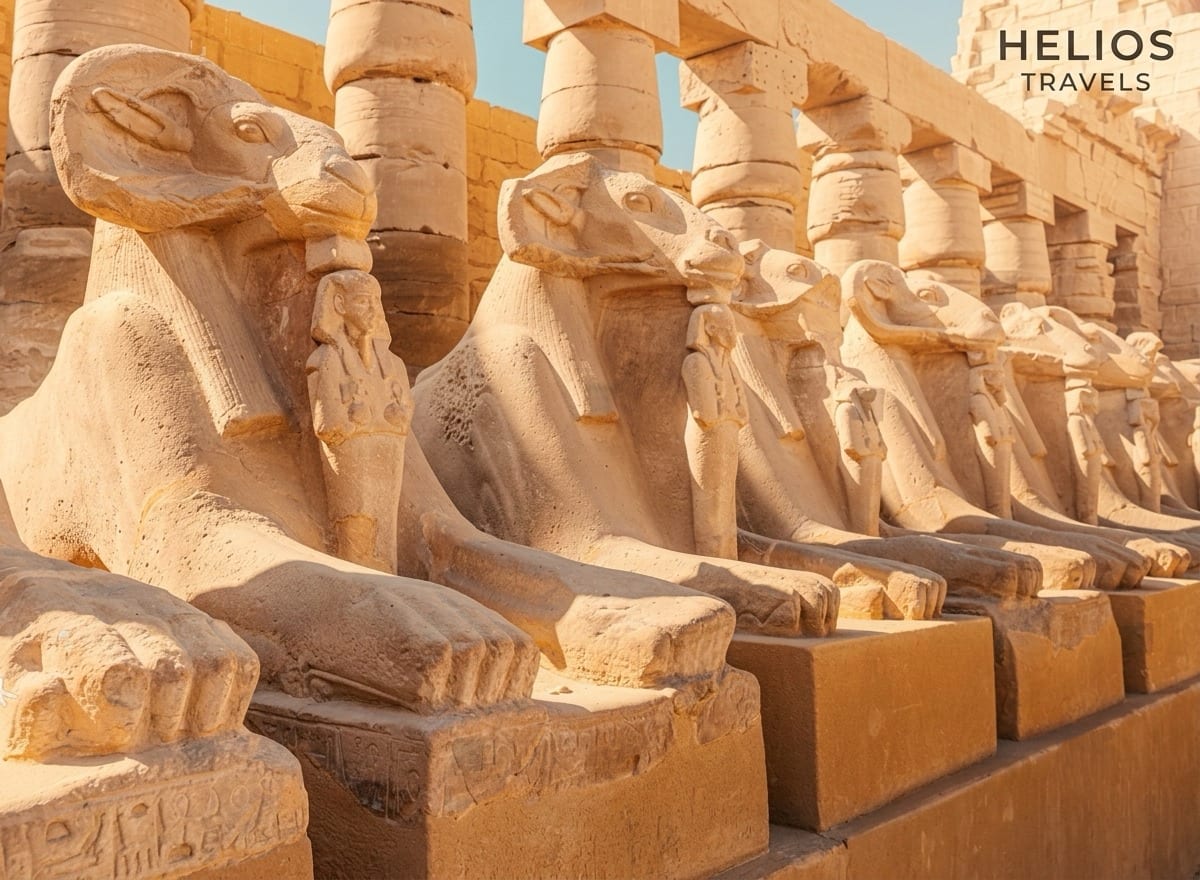
Karnak — 134 columns in the Great Hypostyle Hall, built for Amun-Ra, the sun god
The part that gives people chills
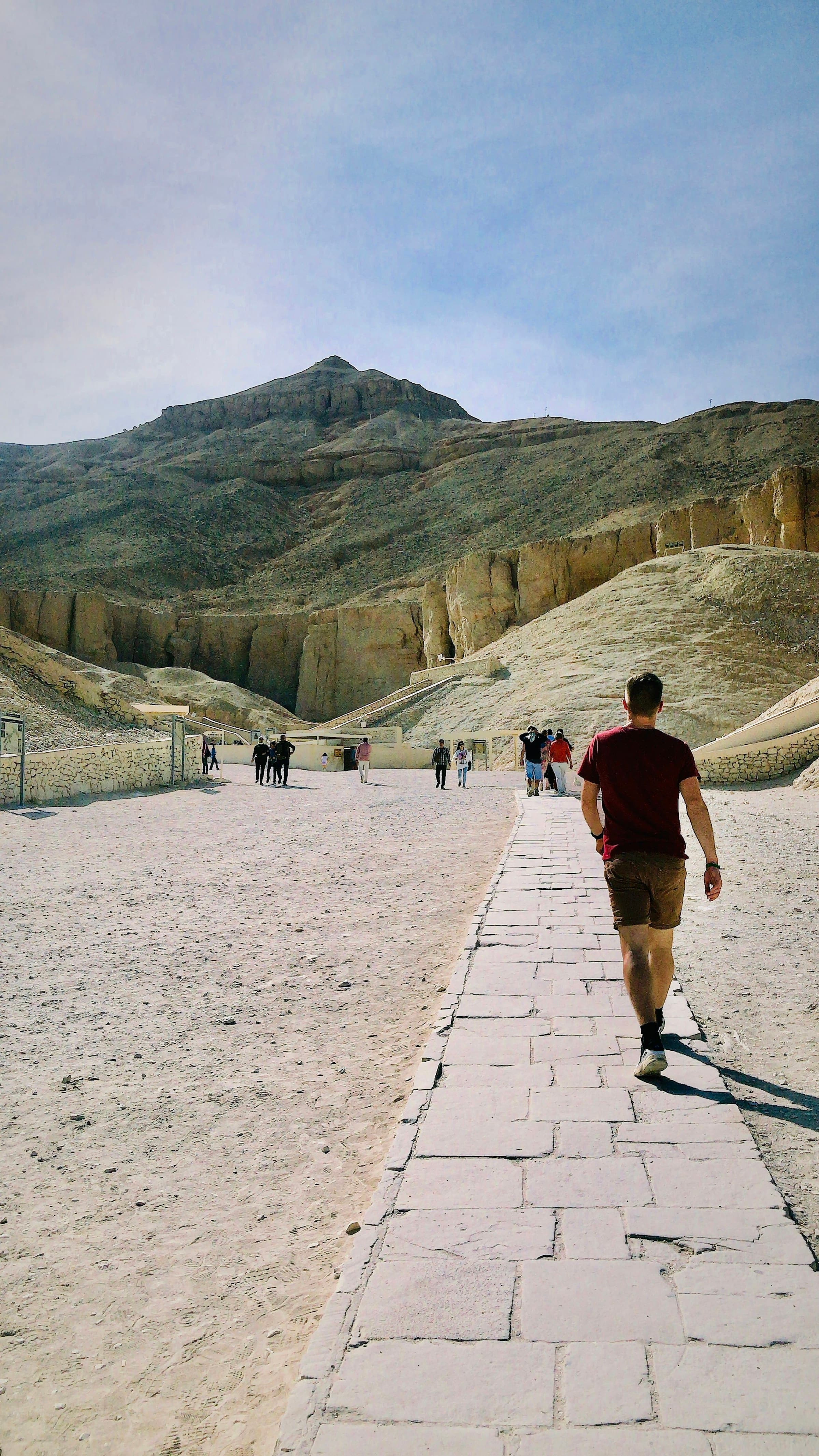
The ancient Egyptians built their entire cosmology around the sun. Ra crossed the sky by day and travelled through the underworld by night, to be reborn each dawn — and the temples at Luxor are that belief in stone. Karnak was the estate of Amun-Ra. The tombs in the Valley of the Kings are decorated, wall to ceiling, with the sun's journey through the twelve hours of darkness.
On 2 August 2027, the sun will go out above all of it, in the middle of the day, for six minutes.
No one needs to embroider that. It is simply going to be one of the most extraordinary things anyone alive will watch.
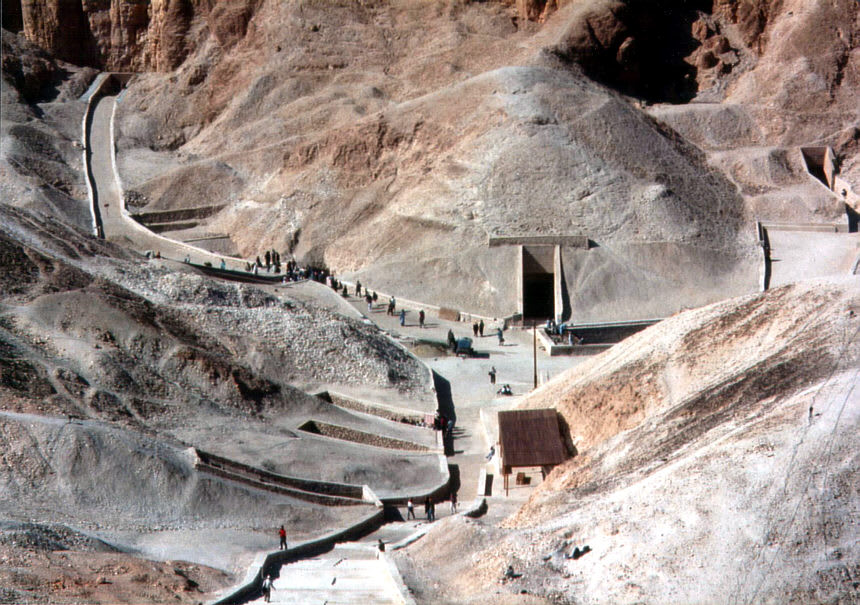
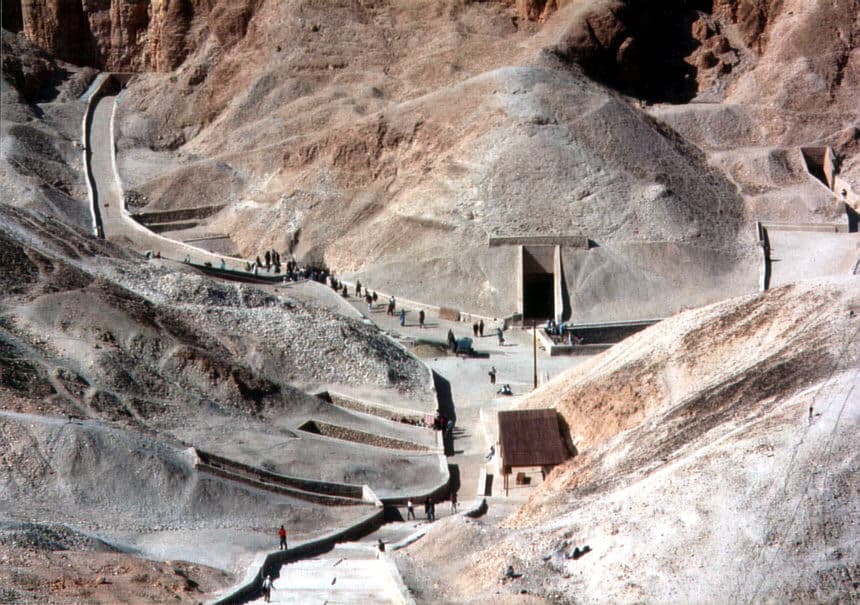
The Valley of the Kings — tombs painted with the sun's nightly passage through the underworld
What actually happens, minute by minute
If you have never seen a total eclipse, the partial phase is not the event. It is the preamble, and it is genuinely strange:
- The hour before. Through your eclipse glasses the sun is a shrinking crescent. To the naked eye almost nothing seems wrong, though the light turns oddly thin and metallic.
- Ten minutes out. Shadows go razor-sharp. Look under a palm tree — the gaps between leaves act as pinholes and scatter hundreds of crescent suns across the ground.
- The last minute. The temperature drops noticeably. Birds go quiet. A wall of darkness comes at you across the desert from the west, faster than feels reasonable.
- Totality. The last bead of sunlight snaps out. The corona appears — a pearl-white halo you cannot photograph properly and will never forget. Only now can you look without a filter. Stars come out. The horizon glows sunset-orange in every direction at once.
- Six minutes later. A single point of light returns on the opposite edge. Glasses back on, immediately.

Book what you just read about
Tours from this article — private, with a licensed guide, and priced per person.