Planning · Sep 9, 2026
Tipping in Egypt: who, how much, and when not to
Baksheesh is three different things, and most of the friction comes from applying the wrong one.
Tipping in Egypt confuses visitors more than any other everyday thing, and the confusion causes real friction — people either over-tip out of guilt, under-tip out of resentment, or spend the holiday anxious about both.
It is simpler than it looks once you understand that baksheesh is not one thing. It is three, and they work differently.
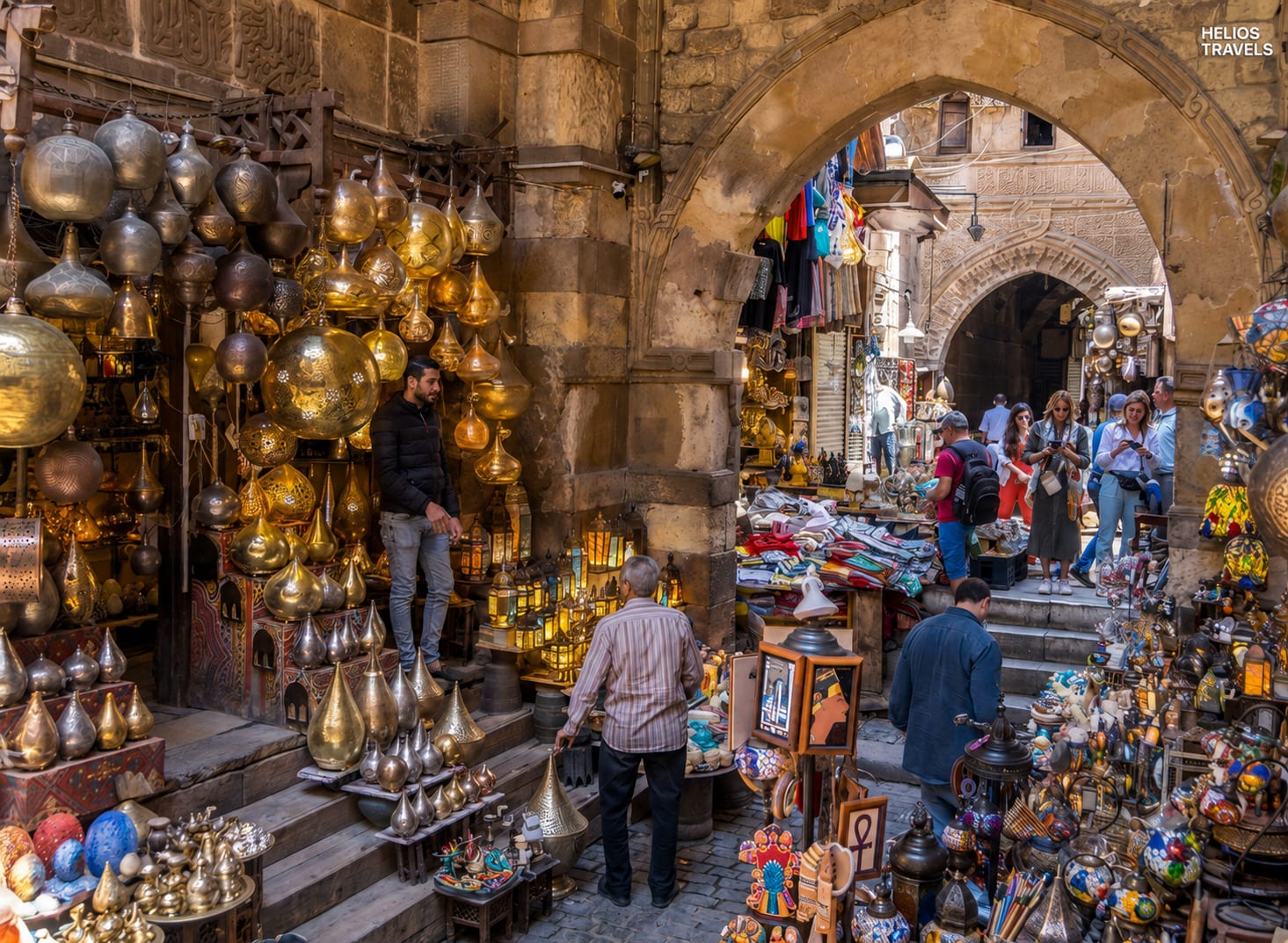
The covered lanes of Khan el-Khalili bazaar in Cairo
The three kinds, which people mix up
1. A tip for service, as you would anywhere. A waiter, a guide, a driver, a housekeeper. Same logic as home: it reflects the quality and the length of the service. This is the one visitors already understand.
2. A small payment for a small service rendered. Someone carries your bag, points you to the right doorway, watches your car, opens a gate. This is closer to a transaction than a gratuity, the amounts are small, and it is entirely normal on both sides. Refusing is fine if you did not want the service; paying something is normal if you accepted it.
3. Baksheesh as alms. Giving to someone who has asked and has no service to offer. This is a religious and social tradition rather than a commercial one, it is a matter of conscience, and it is the one where visitors feel most uncertain. It is entirely acceptable to give, and entirely acceptable not to.
The friction usually comes from applying the wrong frame — treating category 2 as begging, or category 3 as extortion. Neither is true.
Why it exists, briefly
It is worth understanding rather than merely tolerating. In much of Egyptian tourism and service work, the formal wage is low and tips are not a bonus on top of a living — they are a substantial part of how the job pays. A hotel porter, a boat crew member and a tomb guardian are all, to varying degrees, working on this basis.
That is not a reason to be shaken down, and you should decline things you did not ask for. But it does explain the persistence, and it reframes the transaction: you are not being pestered for charity, you are participating in how the sector pays people.
The single most useful thing you can do
Carry a thick stack of small notes. Genuinely — this changes the whole trip more than any advice about amounts.
Almost every awkward tipping moment in Egypt comes down to not having the right change: you want to give something modest, the smallest note you have is far too large, nobody can break it, and you end up either over-paying or giving nothing while apologising. Both feel bad.
Ask at your hotel or a bank to break larger notes early in the trip, keep the small ones in a separate pocket from your wallet, and top them up whenever you get the chance. It removes ninety per cent of the friction.
Book what you just read about
Tours from this article — private, with a licensed guide, and priced per person.